

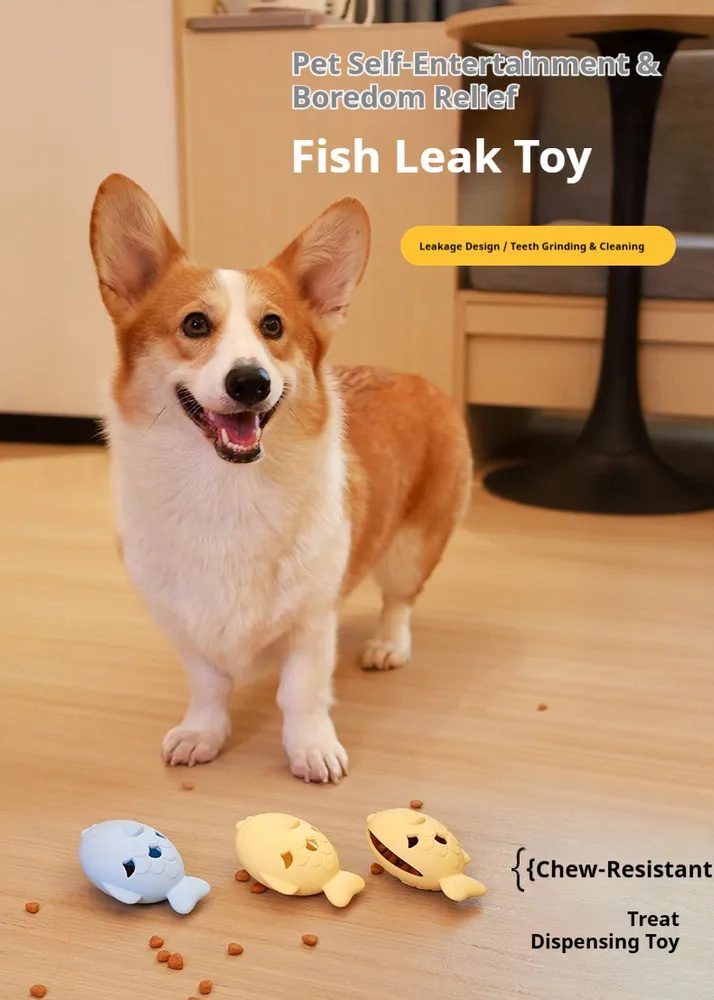
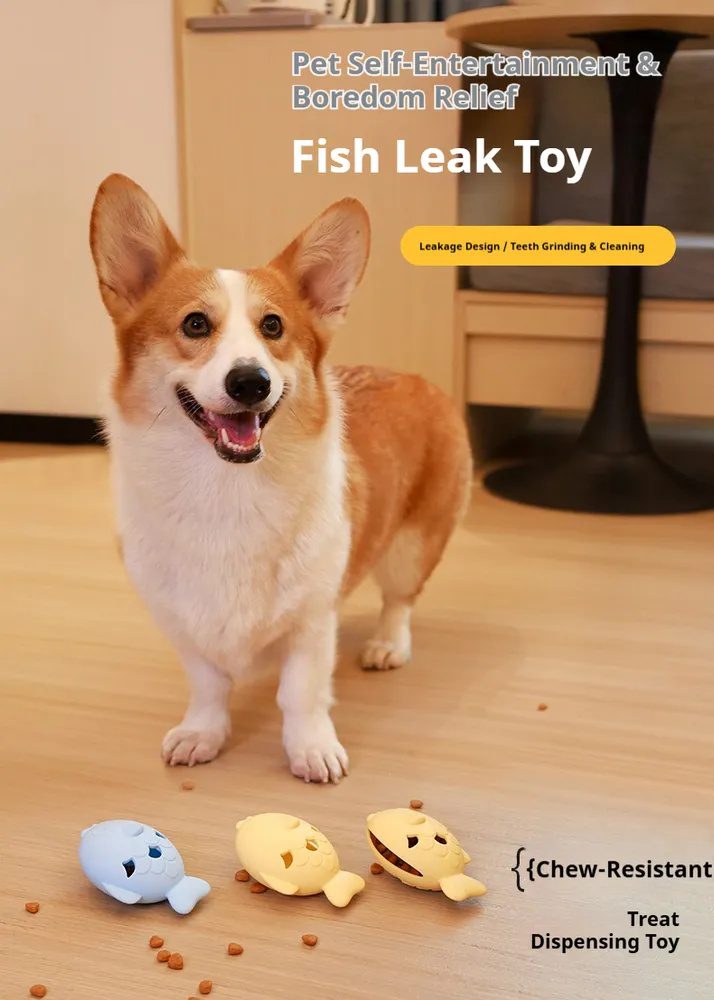




Fish-Shaped Dog Treat Dispenser Toy — Silicone Slow Feeder & Chew Toy
$38.99
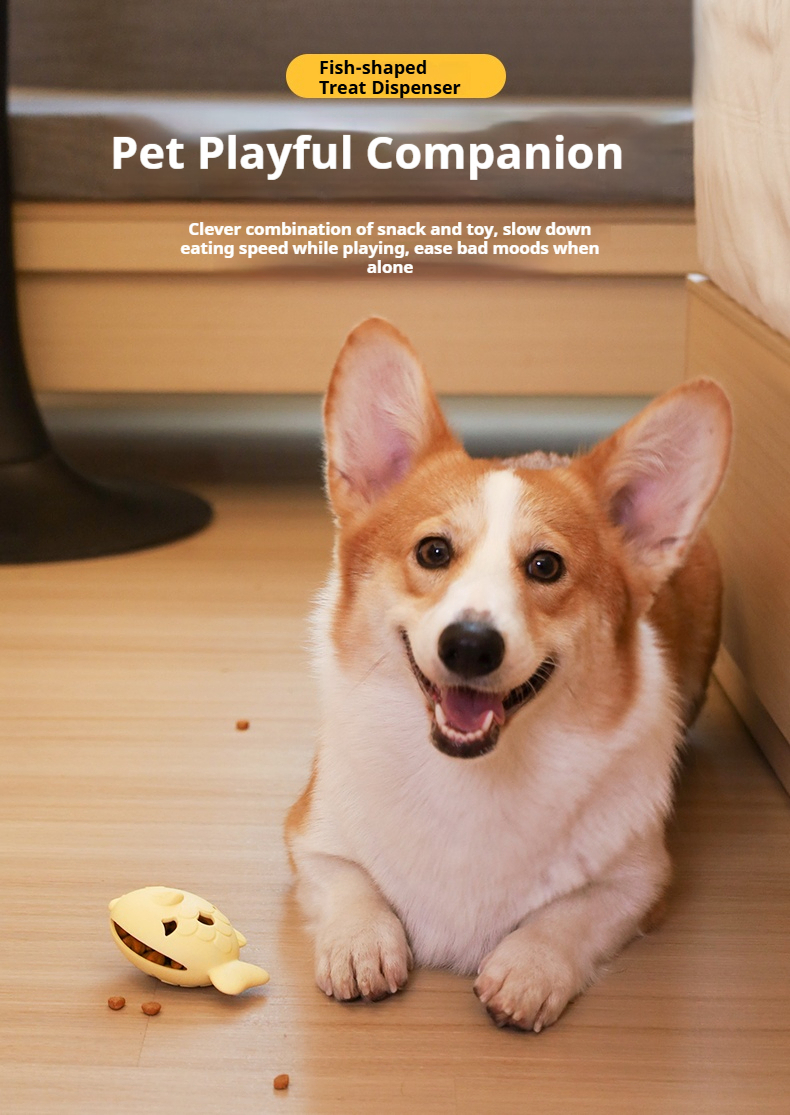
Part treat toy, part dental tool, part anxiety intervention. Our fish-shaped silicone treat dispenser keeps anxious dogs calmly self-entertained for 20+ minutes — releasing treats slowly through a clever leakage design that rewards persistence, cleans teeth through natural chewing, and gives bored, restless dogs somewhere productive to put all that nervous energy.
Description
The Toy That Turns Nervous Energy Into Calm, One Treat at a Time
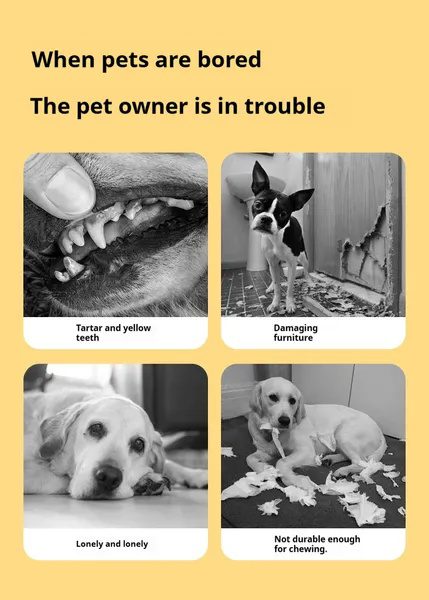
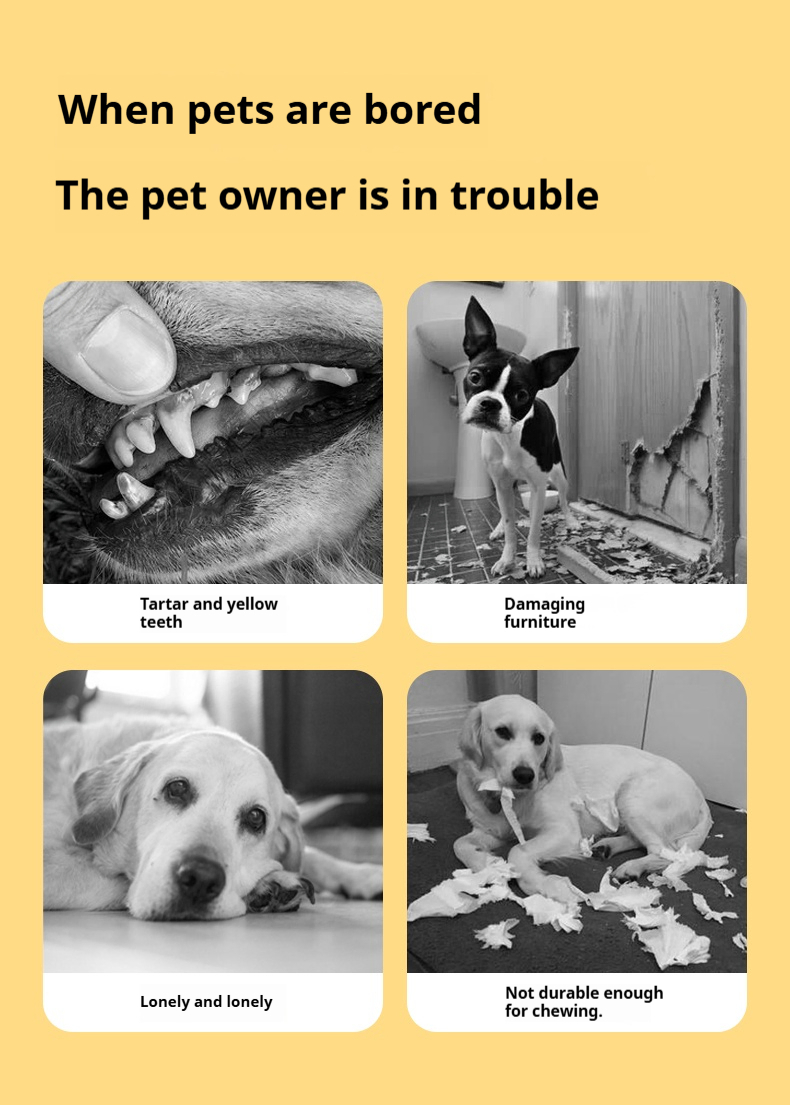
Your dog is bored. You know it. They know it. And they are about to express it in some way you are not going to enjoy.
Maybe it is the couch cushion. Maybe it is the skirting board. Maybe it is the bark-bark-barking that started the moment you sat down to do something — anything — for yourself.
The PawCalmHub Fish Treat Dispenser Toy was designed for exactly this moment. Stuff it with treats or kibble, hand it over, and watch your dog settle into focused, purposeful self-entertainment that keeps them calm, occupied, and genuinely satisfied for twenty minutes or more.
No batteries. No screens. No apps. Just food-grade silicone, a clever treat-leakage design, and the most fundamental calming mechanism available to the canine brain — the hunt.
Why This Shape. Why This Design.
The fish shape is not arbitrary.
Dogs are instinctive hunters. The irregular contours of a fish-shaped toy — the tail fin, the curved body, the slightly pointed nose — create a three-dimensional grip challenge that keeps engagement high from every angle. Unlike a standard ball or cylinder, there is no single “right” way to hold a fish. Every chewing and manipulating approach reveals a different surface, a different texture, a different treat-release angle.
This means your dog has to keep thinking. Keep adjusting. Keep working. And that sustained cognitive engagement — the planning, the problem-solving, the persistence — is precisely what depletes the anxious restless energy that drives destructive behavior.
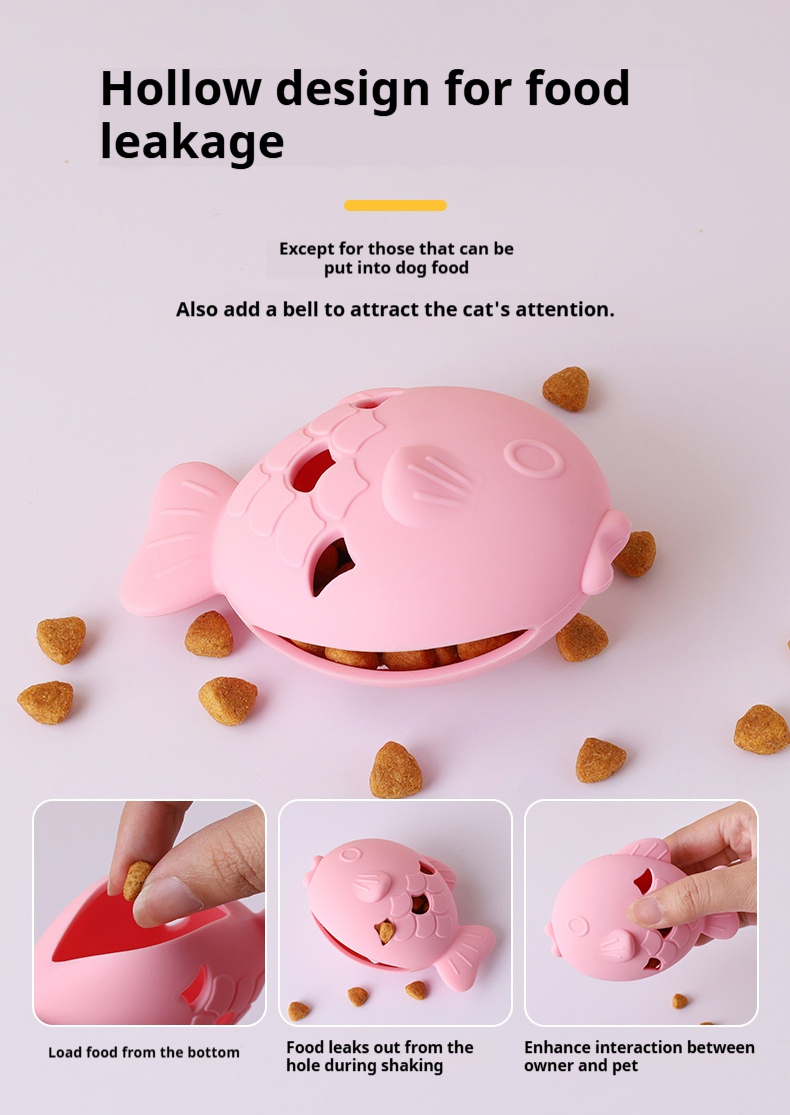
The treat leakage design dispenses treats gradually as your dog chews, nudges, rolls, and mouths the toy — never all at once, never in a predictable pattern. This variable reward schedule is neurologically the most engaging format possible. The brain’s dopamine system responds most powerfully not to guaranteed rewards but to unpredictable ones — making your dog more focused, more persistent, and more genuinely satisfied than a toy that simply delivers on demand.
Three Problems Solved in One Toy
Problem 1 — Boredom and Anxiety
An under-stimulated dog is an anxious dog. The fish dispenser provides the foraging experience the canine brain evolved for — searching, manipulating, problem-solving, and finally retrieving a food reward. This is not entertainment. This is neurological need-fulfillment.
When a dog engages in sustained treat-foraging behavior, their brain releases dopamine through the reward pathway while simultaneously suppressing cortisol — the stress hormone driving anxiety and restlessness. The result is the calm, contented tiredness of a brain that has genuinely worked — not the frustrated overstimulation of a dog who ran around without purpose.
Research in Applied Animal Behaviour Science confirms that dogs given daily cognitive enrichment activities show measurable reductions in anxiety-related behaviors within two weeks. The fish dispenser is that enrichment activity, available any time, anywhere, without any effort from you.
Problem 2 — Destructive Chewing
Chewing is not misbehavior. It is a deeply hardwired self-soothing behavior — dogs release endorphins through jaw engagement the same way humans might drum their fingers or fidget with something when anxious or bored.
The problem is not that your dog chews. The problem is what they chew when you have not given them an appropriate alternative.
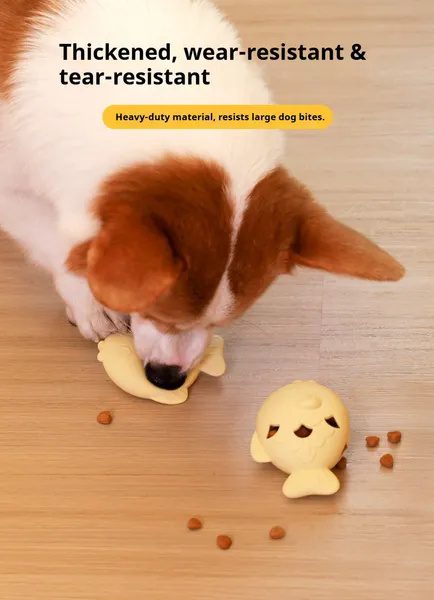
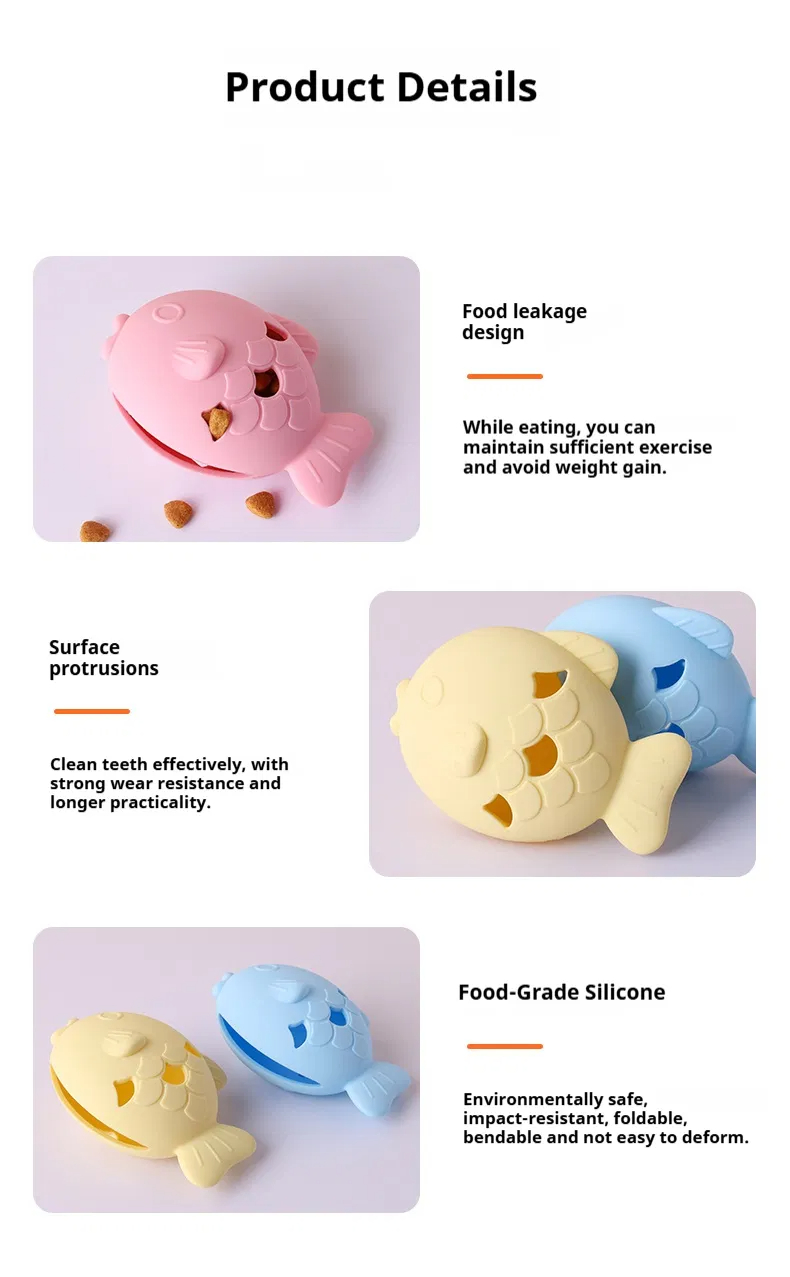
The fish dispenser’s food-grade silicone construction is designed to withstand sustained chewing while remaining completely safe for daily oral contact. The textured surface satisfies the chewing drive while simultaneously cleaning dental surfaces — making this toy one of the few enrichment tools that is genuinely better for being chewed enthusiastically rather than just mouthed gently.
Problem 3 — Dental Hygiene
The raised nubs, ridges, and textured surface of the fish body act as a natural mechanical toothbrush during chewing sessions. The silicone surfaces work against the tooth enamel and gumline — reducing plaque and tartar buildup and stimulating gum tissue in ways that contribute to long-term dental health.
According to the American Veterinary Dental College, dental disease affects an estimated 80% of dogs over age three — making it the single most common health condition in adult dogs. Regular mechanical dental cleaning through appropriate chew toys is one of the most accessible preventive measures available to pet parents.
This toy cleans teeth while calming anxiety while dispensing treats. It is genuinely doing three things simultaneously.
Food-Grade Silicone — Why Material Matters
Not all rubber and silicone dog toys are created equal.
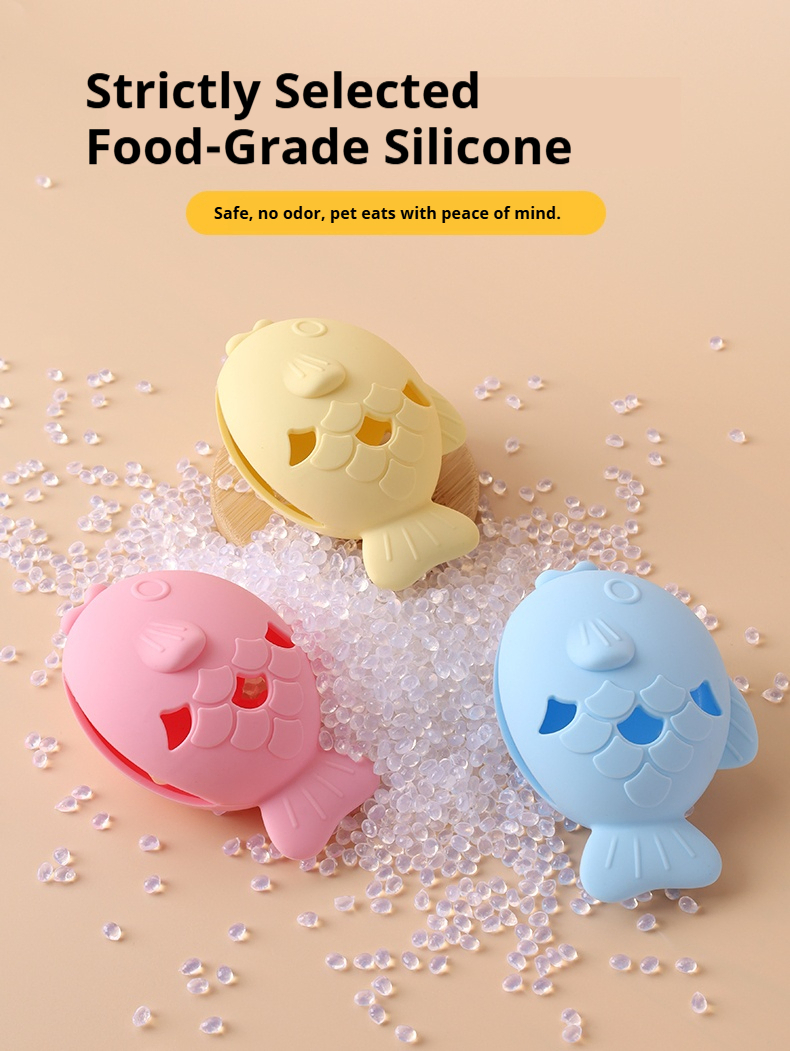
Our fish dispenser is manufactured from food-grade silicone — the same material standard used in human food preparation equipment, baby teething products, and medical devices. This means:
No BPA, no phthalates, no PVC: None of the plasticizers commonly found in cheaper rubber toys that can leach into food and be ingested during chewing sessions.
No off-gassing: Cheap rubber toys frequently have a distinct chemical smell — particularly when new. Food-grade silicone is odorless and flavor-neutral, meaning your dog’s treat reward is not contaminated by chemical taste from the toy itself.
Temperature stable: Safe for freezing — and freezing is one of the most effective ways to use this toy (more on that below).
Non-porous surface: Unlike latex or low-grade rubber, food-grade silicone does not develop micro-cracks that harbor bacteria over time. The surface remains hygienic with regular cleaning across months of daily use.
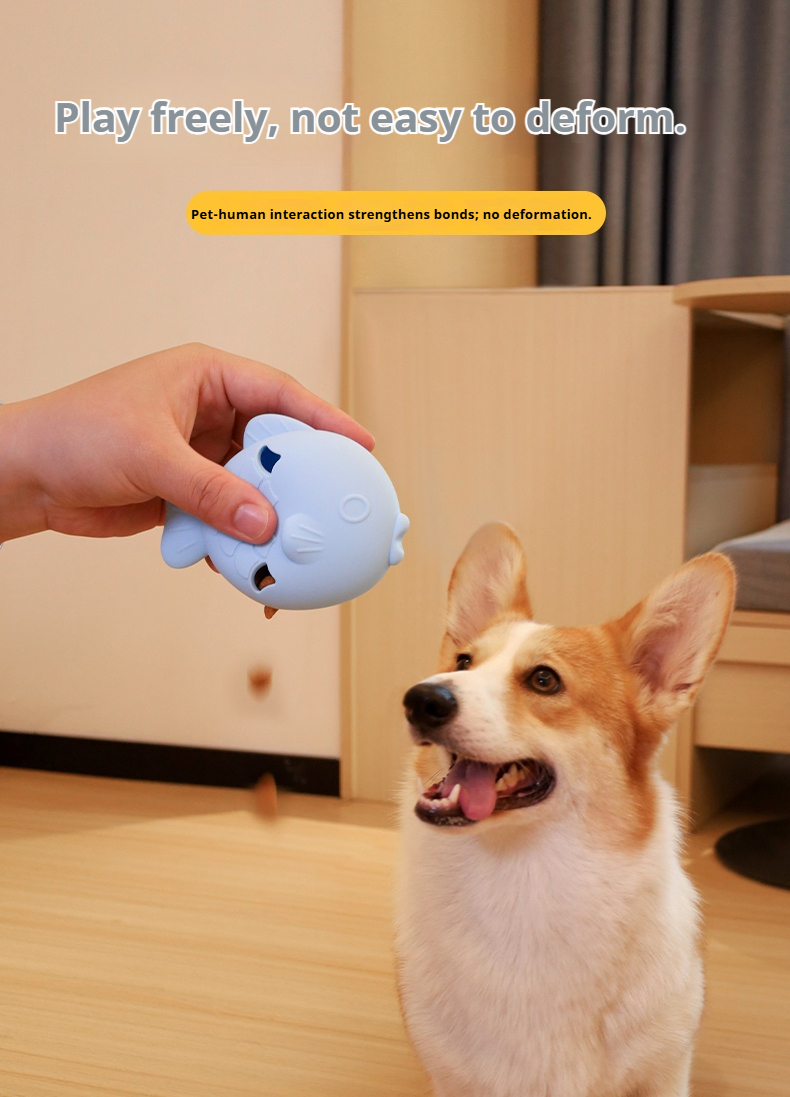
Soft enough for safety, tough enough to last: Food-grade silicone has the flex of a firm gummy texture — it gives under pressure rather than shattering or cracking. This means it is safe for enthusiastic chewers without being so soft that it is destroyed in a single session.
How to Use It — Three Ways for Maximum Impact
Method 1 — Dry Kibble or Treat Fill
The simplest approach. Fill the internal chamber with your dog’s regular kibble or small training treats through the treat dispenser opening. The treats fall out gradually as your dog manipulates and chews the toy — one or two at a time, at unpredictable intervals.
Best for: daily enrichment sessions, self-entertainment during alone time, boredom relief during quiet household periods.
Method 2 — Paste Fill
Fill the internal chamber and coat the external textured surfaces with spreadable food — peanut butter (xylitol-free), soft cream cheese, wet dog food, or mashed banana. Your dog licks and chews simultaneously — accessing the paste from the outer surface while the internal treats reward deeper engagement.
Best for: high-value enrichment moments, acute anxiety triggers, extended engagement sessions, combining the licking and chewing calming mechanisms simultaneously.
Method 3 — Freeze It
This is the method that transforms a 10-minute toy into a 30-45 minute calming session.
Fill with wet food, paste, and kibble mixed. Place in a zip-lock bag and freeze for at least 3 hours (overnight is ideal). Present frozen. The frozen filling requires significant sustained effort to access — extending the session dramatically while simultaneously providing cooling relief on warm days.
Best for: separation anxiety management (give exclusively at departure), high-anxiety days, post-exercise cooling, crate enrichment, keeping your dog occupied during video calls, working from home, or any moment you need them calm for an extended period.
The departure protocol: Fill and freeze the night before every workday. Give exclusively when you leave — never at other times. Within 2–3 weeks, most dogs with separation anxiety begin anticipating departure positively because they associate it with the appearance of this toy. The anxiety trigger becomes a treat trigger. This is counter-conditioning in practice.
Size Guide
| Dog Size | Weight | Recommended Use |
|---|---|---|
| Small | Under 15 lbs | Perfect fit — all surfaces accessible, treat opening appropriate for small kibble |
| Medium | 15–50 lbs | Ideal — provides substantial engagement without being too large to manipulate |
| Large | 50–90 lbs | Works well — durable enough for enthusiastic larger chewers |
| Power chewers | Any size | Monitor initial sessions — food-grade silicone is durable but assess your individual dog’s chewing intensity |
Note for cats: This toy works equally well for food-motivated cats. Fill with small kibble or cat treats. Many cats engage through bat-and-roll behavior rather than chewing — which releases treats effectively through the leakage design without requiring jaw engagement.
What to Fill It With — A Complete Guide
Dry options (easiest cleanup):
- Regular dry kibble — use a portion of your dog’s daily food allowance
- Small training treats — high-value for maximum motivation
- Freeze-dried treats broken into small pieces
- Dental treats broken into small pieces
Paste options (longest sessions, most engagement):
- Natural peanut butter — always check it contains no xylitol (toxic to dogs)
- Plain unsweetened Greek yogurt
- Cream cheese (plain, low sodium)
- Mashed banana or sweet potato
- Wet dog food or pâté
- Bone broth (frozen version is particularly effective)
Combination approach (maximum engagement): Layer dry kibble inside the chamber, spread paste across the external textured surfaces, and freeze. Your dog gets licking, chewing, and treat-foraging simultaneously — three distinct calming behaviors in one session.
Foods to always avoid:
- Anything containing xylitol (many peanut butters, some yogurts) — toxic to dogs
- Grapes or raisins — toxic
- Onion or garlic — toxic
- Excessive salt — harmful in quantity
- Chocolate — toxic
Combining the Fish Dispenser With Your PawCalmHub Routine
The fish dispenser fits naturally into several points in a daily anxiety management routine:
Morning departure ritual: Frozen fish dispenser given exclusively at your departure → calming supplements taken 45 minutes earlier → your dog associates your leaving with getting the best toy in the house.
Midday enrichment: Fresh-filled fish dispenser during the peak boredom period of a long alone day → extends engagement and depletes mental energy.
Pre-crate settlement: Fish dispenser filled with paste given 10 minutes before crate time → your dog is licking and chewing their way to calm before the door closes.
Storm and fireworks management: Frozen fish dispenser presented at the first sign of a storm → pairs with your compression vest and calming chews for a three-layer acute anxiety intervention.
Vet visit waiting room: Fresh paste-filled dispenser given in the waiting room → sustained engagement suppresses the cortisol spike from the clinical environment.
What Pet Parents Are Saying
“My Border Collie mix has always needed a job. I bought this as a last resort after she destroyed two remote controls and a phone charger in the same week. I freeze it with peanut butter the night before and give it when I leave for work. She is a completely different dog. My downstairs neighbor actually asked me if I had rehomed her because it got so quiet.” — Claire B., Seattle WA ⭐⭐⭐⭐⭐
“The fish shape sounds gimmicky but it genuinely matters. My dog has had three other treat dispensers and he figures them all out within a few days and loses interest. This one he approaches differently every time because the shape means he naturally picks it up from a different angle. Three weeks in and he is still just as engaged as day one.” — Marcus T., Austin TX ⭐⭐⭐⭐⭐
“I have an anxious rescue who does not play with toys. She is not motivated by anything non-food-related. This is the first toy she has ever engaged with. I think because it does not feel like a toy — it feels like a food puzzle. She works it for 25 minutes straight. Her whole body language is different while she is using it — focused and calm instead of that constant anxious scanning she normally does.” — Priya A., Boston MA ⭐⭐⭐⭐⭐
“My vet mentioned at our last appointment that my dog’s teeth looked noticeably cleaner than at the previous visit. The only thing I changed was adding this toy to our evening routine. I cannot attribute it to anything else. For a toy that is mainly about enrichment, the dental benefit is real.” — Tom W., Nashville TN ⭐⭐⭐⭐⭐
“I work from home and my dog has always struggled with the fact that I am home but unavailable. He would whine and paw at me constantly during calls. I give him the frozen fish dispenser at the start of every call now. He settles immediately and stays occupied for the entire call. My clients have no idea I have a dog.” — Natalie S., Denver CO ⭐⭐⭐⭐⭐
Care and Maintenance
Cleaning:
- Dishwasher safe — top rack, standard cycle
- Handwash with warm soapy water and a bottle brush to reach internal chambers
- Rinse thoroughly and allow to air dry completely before storage or refilling
- For paste fills — soak in warm water for 5 minutes first to loosen dried food before washing
Inspection:
- Check the toy before every use for signs of wear — significant cracking, tearing, or pieces separating
- Replace immediately if pieces are breaking away — swallowed silicone fragments can cause intestinal blockage
Storage:
- Store in a cool, dry location between sessions
- For best novelty maintenance — put away after every session and only present at designated enrichment times
- Rotate with your snuffle mat and lick mat on alternating days to maintain engagement and prevent habituation
Freezer:
- Freeze-safe at all standard freezer temperatures
- Freeze with filling in a zip-lock bag to prevent absorbing freezer odors
- Frozen toy can be given directly from the freezer — no thawing required
Our Guarantee
Every PawCalmHub product is backed by our 30-day satisfaction guarantee. If the fish treat dispenser does not make a visible difference to your dog’s boredom, anxiety, or self-entertainment behavior within 30 days of consistent daily use — contact us and we will make it right.
Free US shipping on all orders. Arrives in 5–8 business days to all 50 states.
Questions about how to use the fish dispenser for your dog’s specific anxiety type? Email us at hello@pawcalmhub.com — we respond within 24 hours and love helping pet parents find the right combination of tools for their individual dog.
Frequently Asked Questions
Q: Is this toy safe for aggressive chewers? A: Food-grade silicone is durable and resistant to moderate chewing. However, for dogs classified as power or destructive chewers — those who systematically destroy tough rubber toys — we recommend supervising early sessions to assess your individual dog’s interaction style. If your dog is attempting to bite pieces off rather than chew the surface, this toy may not be appropriate for unsupervised use.
Q: How much food should I put inside? A: Use no more than 20–30% of your dog’s daily food allowance in the dispenser per session to avoid overfeeding. If you use the dispenser twice daily, reduce each fill accordingly. Factor treat-filled dispenser sessions into your dog’s total daily calorie count.
Q: My dog loses interest after a few minutes. What should I do? A: The filling is not high-value enough. Upgrade from kibble to small training treats, or switch to a paste filling like peanut butter. The frozen version almost always extends engagement significantly — try freezing it before deciding the toy is not working.
Q: Can I use this with wet food only? A: Yes — fill the chamber with wet food and freeze. This works very well and produces a longer session than room-temperature wet food. Clean thoroughly after wet food use as it can develop bacteria in the internal chamber faster than dry food.
Q: At what age can puppies use this toy? A: From weaning age onward, supervised. For young puppies under 12 weeks, use very soft fillings and monitor carefully. Ensure the treat opening size is appropriate for your puppy’s kibble or treat size — very small puppies should not have access to treats that could be swallowed whole.
Q: Does the variable treat release actually matter or is that just marketing? A: It genuinely matters neurologically. Variable reward schedules — where rewards come unpredictably rather than on a fixed pattern — produce significantly more sustained engagement and motivation than predictable reward schedules. This is well-established behavioral science, not marketing language. The unpredictable treat release is a design feature, not a flaw.
PawCalmHub — pawcalmhub.com Free US Shipping · 30-Day Guarantee ·
Specification
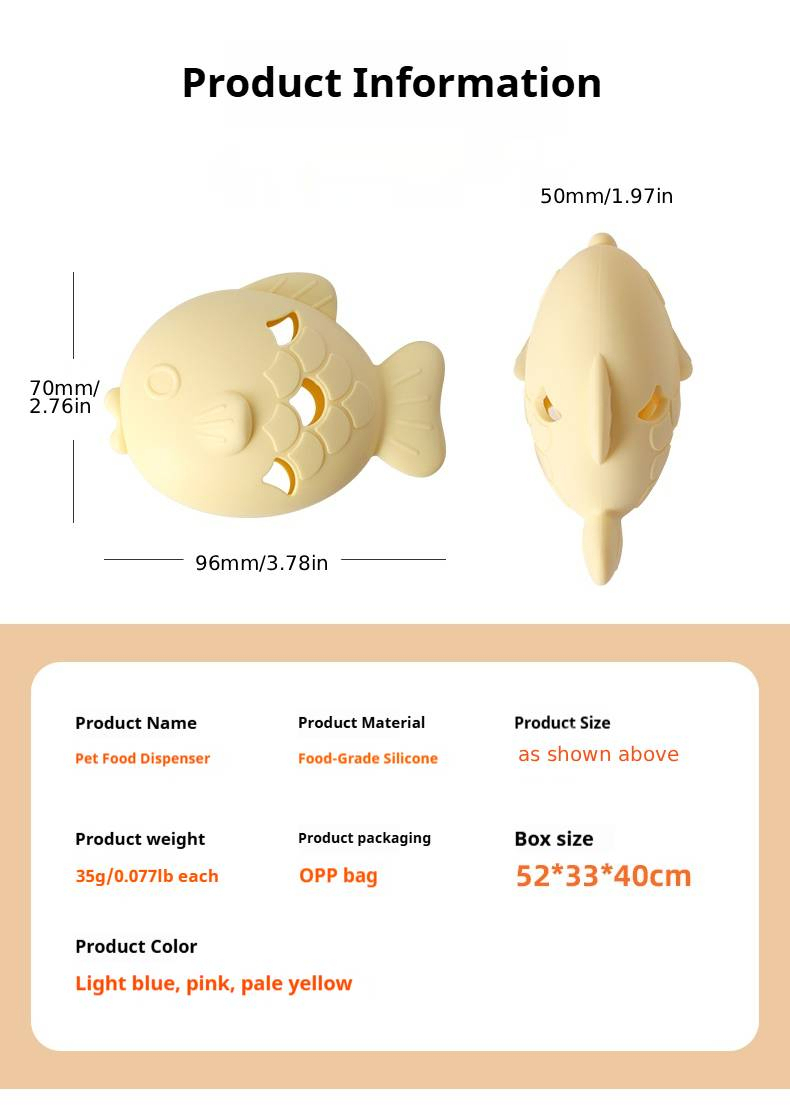
- 3.78 in. * 2.76 in. * 1.97 in.
- 0.08 lbs
- United States
- Product Name:Pet Food Dispenser
Product weight:35g/0.077lb each
Product Material:Food.Grade silicone
Product packaging:OPp bag
Product Size:as shown above
Box size:12*12*4cm
Details

Additional information
| Weight | 0.10 lbs |
|---|---|
| Dimensions | 120 × 120 × 40 in |
| Color | Blue, Pink, Yellow |
Related products
-

Dog & Cat Lick Mat
$38.61 Select options This product has multiple variants. The options may be chosen on the product page -
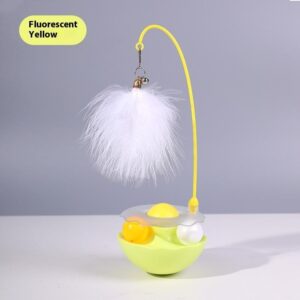
CAT TUMBLER TOY BALL
$47.99 Select options This product has multiple variants. The options may be chosen on the product page -
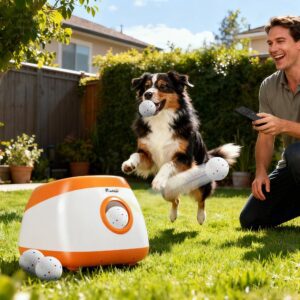
Automatic Dog Ball Launcher — 26–79 FT Range for Medium & Large Dogs
$155.99 Select options This product has multiple variants. The options may be chosen on the product page -
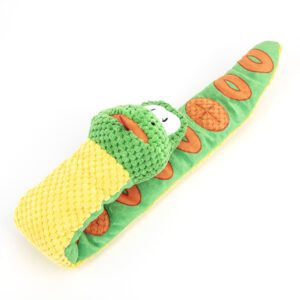
Dog Snuffle Mat Chew And Treat Dispensers
$33.78 Select options This product has multiple variants. The options may be chosen on the product page
Reviews
There are no reviews yet.