
📊 Evidence-Based Content Rating
⭐⭐⭐ Clinical evidence: Peer-reviewed veterinary studies
⭐⭐ Moderate evidence: Some studies + strong professional consensus
⭐ Emerging evidence: Theoretical or early-stage research
This article uses this rating system throughout for full transparency.
Reviewed for alignment with AKC and Fear Free veterinary guidelines.
Written by The PawCalmHub Team. Reviewed for alignment with current veterinary behavioral guidelines and the American Kennel Club (AKC). Last updated 2025.
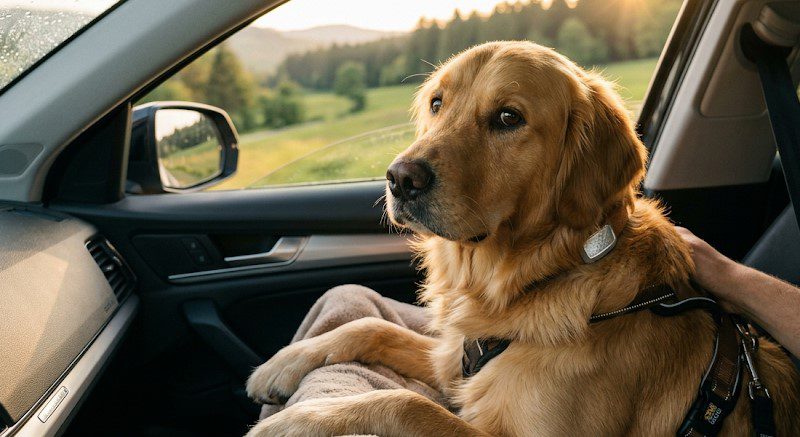
For most dogs, the car is simply a method of transportation. For a dog with car anxiety, it is something else entirely — a moving, vibrating, visually overwhelming enclosed space that smells of exhaust and goes places that historically have not been pleasant.
The vet. The groomer. The kennel.
If your dog’s entire early car experience consisted of these destinations, their anxiety about the car is completely rational. This guide covers why car anxiety happens, how to distinguish its causes, and the exact protocol used by veterinary behaviorists to help car-anxious dogs reach the point where they jump in willingly.
Why Do Dogs Get Car Anxiety?
Car anxiety in dogs has three distinct root causes — and they require different interventions:
Cause 1: Motion Sickness
The most physiological of the three. Dogs — particularly puppies — frequently experience genuine motion sickness due to an inner ear that is still developing or hypersensitive to movement. A dog who is nauseated in the car is not being dramatic. They are physically unwell.
Signs of motion sickness: excessive drooling, lip licking, swallowing repeatedly, lethargy, vomiting. They may not appear particularly anxious before the nausea hits.
This is a veterinary issue first — your vet can prescribe anti-nausea medication (maropitant/Cerenia) that is both safe and highly effective for car-related nausea. Resolving the nausea often resolves the anxiety, because the negative physical association was driving it.
Cause 2: Negative Destination Association
If most car rides end at the vet or groomer, the car itself becomes a predictor of unpleasant experiences. This is a conditioned emotional response — the car is not the problem; the association is.
Signs: anxiety that builds before getting in the car, recognition of the car in the driveway triggering stress, improved anxiety on trips to dog-friendly destinations.
This is a behavioral issue first. The solution is counter-conditioning — systematically pairing the car with positive experiences until the association shifts.
Cause 3: Generalized Anxiety About Confinement or Motion
Some dogs have a generalized sensitivity to enclosed spaces, restriction of movement, or unpredictable motion that manifests specifically in car environments. This is common in dogs who also struggle with crates, grooming restraint, or escalators/lifts.
Signs: anxiety that begins the moment the door closes, regardless of destination. Panic that does not improve as the trip continues.
This requires a comprehensive desensitization protocol starting from stationary exposure before any movement is introduced.
Car Environment Factors Most Guides Miss
Beyond the behavioral and physiological causes, several environmental factors significantly affect car anxiety that most content completely ignores:
Temperature: Dogs regulate temperature less efficiently than humans. A car interior that feels comfortable to you may be genuinely stressful to your dog — particularly in summer. Research from veterinary emergency medicine shows that dogs in warm cars show elevated cortisol even without significant temperature increases. Aim to keep car temperature below 70°F during travel. Use AC during summer months from before your dog enters the vehicle so the interior is already cool.
Ventilation and airflow: Fresh air reduces motion-sickness-related nausea significantly. Cracking rear windows (2 to 3 inches, not enough for a dog to stick their head out safely) creates airflow that helps dissipate the exhaust smell that triggers nausea in motion-sick dogs. Avoid recirculating air mode — use fresh air intake throughout the journey.
Orientation: Dogs facing forward experience less visual motion confusion than dogs facing sideways or backward. Position your dog’s travel setup to face the direction of travel where possible.
Vibration: Road vibration transmitted through the car floor can trigger nausea in motion-sensitive dogs. A well-padded travel bed or hammock reduces direct vibration contact compared to bare seat or crate floor.
The Complete Car Anxiety Desensitization Protocol
Phase 1: The Car Is a Good Place (Stationary)
Session goal: your dog enters the parked car voluntarily and eats treats inside without distress.
- Open the car door. Scatter treats on the back seat. Let your dog sniff from the ground first.
- Over multiple sessions, encourage them to put their front paws in. Treat generously.
- Progress to all four paws inside. Treat. Praise. Do NOT close the door yet.
- Once your dog is comfortable in the stationary car with an open door: close the door briefly. Treat. Open immediately.
- Build duration with closed door over multiple sessions until your dog is relaxed.
This phase can take 3–14 days depending on the severity of the anxiety. Never rush it.
Phase 2: The Engine Is Running (Still Stationary)
- Repeat Phase 1 but with the engine running.
- For many dogs, the sound and vibration of the engine is a significant trigger — treat heavily throughout.
- Extend duration of engine-running sessions gradually before any movement.
Phase 3: Very Short Trips to Nowhere Special
- First movement: drive to the end of the driveway and back. Treat throughout.
- Next session: drive around the block.
- Build distance and duration extremely gradually.
- Destination is key: end at a park, a pet store, a trail — somewhere positive. Never the vet in the early stages of this protocol.
Phase 4: Destination Pairing
- Systematically introduce vet and groomer trips only after positive trip associations are well-established.
- Call ahead and ask to bring your dog in for a “happy visit” — a trip to the clinic where they get treats from staff and leave without any procedure happening. Repeat 3–5 times before any actual appointment.
Tools That Make Car Trips Calmer Right Now
While the desensitization protocol works long-term, these tools reduce the intensity of car anxiety immediately:
Lick Mat in the car: Mount a lick mat to the car seat or window using its suction cup base. Spread peanut butter or soft food before departure. The licking response suppresses the cortisol stress response and gives your dog something rewarding to focus on throughout the trip.
Hemp Calming Chews given 60 minutes before: The combination of L-theanine, hemp extract, and melatonin takes the physiological edge off the anxiety response — making your dog better able to process the experience without full panic. Give consistently before every car trip during the desensitization process.
Anxiety Compression Vest: Put on before getting in the car. Deep pressure therapy activates the parasympathetic nervous system, reducing the cortisol spike that the car environment can trigger. Must be fitted correctly to be effective.
Window coverage: For dogs who are triggered by the visual stimulation of passing scenery, a car seat cover that partially blocks the windows reduces the visual overwhelm significantly. Travel crates with partial coverage achieve the same effect.
Proper restraint — safely and without restriction: A dog who slides around on a back seat during braking or cornering experiences physical stress that compounds anxiety. A properly fitted car harness (crash-tested if possible) attached to the seat belt provides security and reduces the physical unpredictability of car travel.
Motion Sickness — Additional Management
If motion sickness is contributing to car anxiety:
- Stop feeding your dog for 3–4 hours before car trips
- Keep the car well-ventilated — fresh air reduces nausea significantly
- Face your dog forward rather than sideways (less visual motion confusion)
- Ask your vet about maropitant (Cerenia) — a prescription anti-nausea medication that is very effective for car-related sickness
- Ginger (in dog-safe doses) has mild anti-nausea properties and is safe for most dogs
The AKC recommends working with your veterinarian to rule out motion sickness as a contributing cause of car anxiety before pursuing purely behavioral solutions, noting that unresolved nausea significantly undermines behavioral desensitization efforts. Their full car anxiety guide is at AKC.org.
Car Anxiety Gear Guide — Choosing the Right Setup
The right physical setup reduces car anxiety before behavioral training even begins:
| Gear Type | Anxiety Benefit | Best For | Price Range | Limitation |
|---|---|---|---|---|
| Car hammock/seat cover | Prevents sliding, reduces physical instability | Dogs anxious due to movement unpredictability | $120 – $250 | Does not restrain — add harness |
| Crash-tested travel harness | Security, reduces sliding, safety restraint | All dogs in cars — safety essential | $$20 – $50 | Must be crash-tested (Center for Pet Safety rating) |
| Soft travel crate (secured) | Enclosed den feel reduces visual overwhelm | Dogs with confinement-comfort patterns | $50 – $120 | Requires proper securing in vehicle |
| Raised booster seat | Elevation = view out window, reduces visual motion | Small dogs who are triggered by limited visibility | $60 – $130 | Not for large breeds |
| Window shade covers | Reduces visual motion stimulus | Dogs specifically triggered by passing scenery | $15 – $40 | May make some dogs more claustrophobic |
| Cooling mat in car | Temperature regulation, reduces heat-related stress | Summer travel, thick-coated breeds | $25 – $50 | Needs periodic re-cooling |
Why is my dog suddenly scared of the car?
Sudden onset car anxiety in a previously car-comfortable dog almost always indicates a specific negative experience during a recent trip — a frightening noise, an accident, an aversive vet visit — that has created a new negative association. Return to the basic desensitization protocol starting from stationary exposure.
How long does it take to fix dog car anxiety?
Mild car anxiety with clear destination association typically responds to counter-conditioning within 2–4 weeks. Severe anxiety with motion sickness and generalized confinement fear can take 2–3 months of consistent work. Patience and consistency matter more than speed.
Should I sedate my dog for car travel?
Sedation is not the first choice for car anxiety management — it suppresses the anxiety without addressing the underlying association, and sedated animals cannot properly respond to their environment during travel, which creates safety risks. Discuss all options with your vet before considering sedation.
Can car anxiety be cured?
the majority of dogs with car anxiety show complete resolution or significant improvement with consistent desensitization, destination counter-conditioning, and appropriate support tools. The dogs who do not improve are typically those whose motion sickness was not addressed alongside the behavioral work
My dog gets car sick. Is this the same as anxiety?
Motion sickness and anxiety are distinct but frequently co-occur and amplify each other. A dog who feels nauseated in the car becomes anxious about the car; an anxious dog shows nausea more intensely. Treat both simultaneously for fastest results.
Can I leave my anxious dog in the car for 5 minutes?
The safety answer and the anxiety answer are different here. On safety: never leave a dog in a parked car in warm weather — temperatures inside a parked car rise 20°F within 10 minutes even on mild days and can be fatal. On anxiety: even in safe temperatures, leaving an anxious dog alone in a car (a novel, enclosed environment away from you) can trigger significant distress in a short time. If you must leave your dog briefly, park in shade with windows cracked, limit time to under 5 minutes, and assess your dog’s response.
My dog pants and drools in the car even on short trips. Is this anxiety or sickness?
Both. Drooling combined with lip licking and swallowing repeatedly is more strongly associated with motion sickness (nausea). Panting combined with yawning and restlessness is more associated with behavioral anxiety. Many dogs have both simultaneously. Address motion sickness medically first (discuss Cerenia with your vet) — resolving nausea often dramatically reduces the behavioral anxiety component.
After this review: “Our Hemp Calming Chews are the most popular choice for car anxiety — given 60 minutes before the trip, they reduce the physiological stress response enough to make desensitization work faster.”]
About the Author
The PawCalmHub Team
At PawCalmHub, we are a passionate team of pet lovers dedicated to helping anxious pets live calmer, happier lives. Every article we publish is thoroughly researched against current veterinary behavioral guidelines, peer-reviewed studies, and trusted sources including the American Kennel Club and the Fear Free organization. References in this article link directly to the sources cited.
Questions? Email us at hello@pawcalmhub.com — we respond within 24 hours.
Explore our full range of grooming and wellness tools at PawCalmHub.com