
Written by The PawCalmHub Team. Information in this article is reviewed for alignment with current veterinary behavioral guidelines and the American Kennel Club (AKC). Last updated 2026.
⚠️ Important note: This article provides general wellness information only. Always consult a licensed veterinarian before making changes to your pet’s health or behavior management routine.
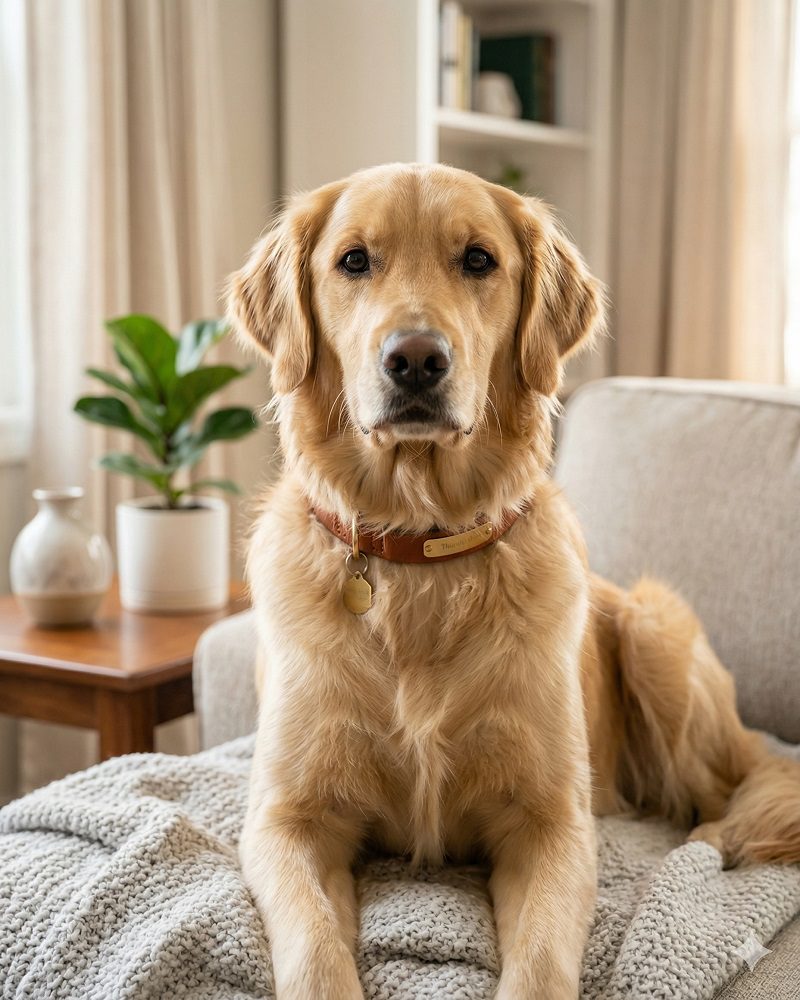
It starts the same way every time.
The sky darkens. A low rumble rolls in from the distance. And before you even register the weather change, your dog does. The panting starts. Then the pacing. Then they’re pressed against your legs or hiding behind the toilet, eyes wide, trembling like a leaf.
If you’re reading this, you know exactly what that looks like — because you’ve lived it, possibly dozens of times. Thunderstorm phobia affects an estimated 40% of dogs in the United States, making it one of the most common anxiety disorders in domestic dogs. And unlike many fears that fade with age, storm phobia often gets worse over time without intervention.
The good news? You’re not helpless. There are nine evidence-backed, vet-aligned strategies that can meaningfully reduce your dog’s storm anxiety — some that work within minutes, others that build long-term resilience. Here’s what actually works.
Why Are Dogs So Scared of Thunderstorms?
Before we talk solutions, it helps to understand what’s actually happening in your dog’s body and brain during a storm. It’s not just the sound of thunder that frightens them — it’s a perfect storm of sensory triggers happening all at once:
- Barometric pressure changes — dogs can sense these drops before you hear a single rumble
- Static electricity buildup — dogs, especially those with thick or double coats, can feel static electricity in their fur, which researchers believe is deeply uncomfortable
- Low-frequency sound vibrations — thunder produces infrasound that humans can barely detect but dogs feel throughout their entire body
- Flashing light from lightning — sudden, unpredictable visual stimulation amplifies the panic response
- The smell of rain and ozone — your dog’s nose is 10,000 times more sensitive than yours, meaning the storm smells overwhelming before it arrives
When all of these hit at once, your dog’s sympathetic nervous system — the fight-or-flight response — kicks into full gear. Their heart races, cortisol floods their system, and their only goal becomes finding safety.
The American Kennel Club notes that thunderstorm anxiety is one of the most common forms of fear in dogs and that this combination of sensory triggers can overwhelm even normally calm dogs. You can read their full guidance on thunder-phobic dogs at AKC.org — Helping Your Dog Through Thunderstorm Anxiety.
9 Ways to Calm Your Dog During Thunderstorms
1. Use a Compression Vest or Anxiety Wrap
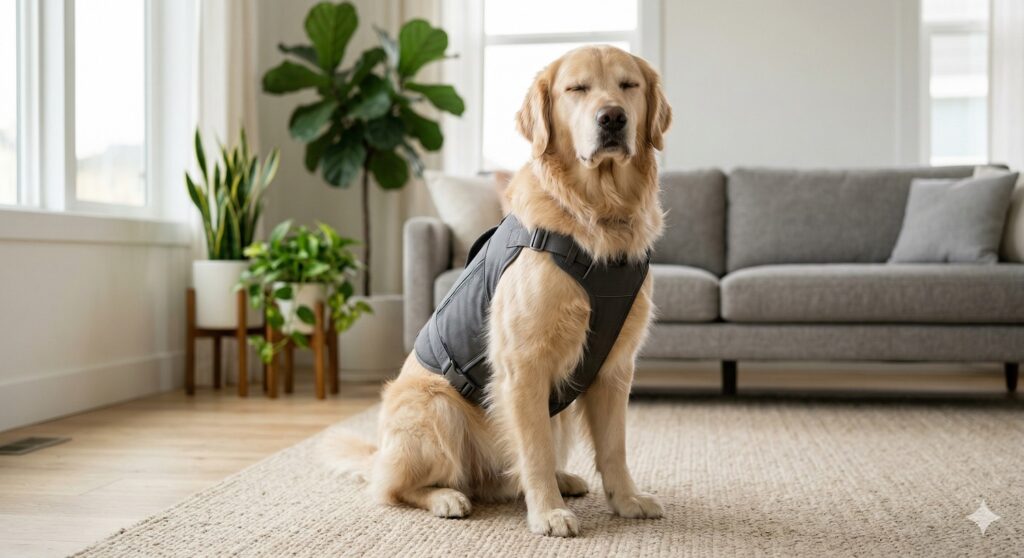
The most immediate and well-researched physical intervention is Deep Pressure Therapy (DPT) — the application of gentle, constant pressure to a dog’s torso. Compression vests work by activating the parasympathetic nervous system (your dog’s “rest and calm” mode), helping override the panic response triggered by the storm.
A 2014 study published in the Journal of Veterinary Behavior found that compression garments reduced anxiety-related behaviors in 89% of dogs studied. Put the vest on 20–30 minutes before a predicted storm if possible, or the moment you notice the first signs of anxiety.
Dr. Karen Overall, MA, VMD, PhD, DACVB, one of the most cited veterinary behaviorists in the field of companion animal anxiety, has written extensively about pressure-based interventions as a frontline tool for noise phobia — noting that their non-pharmaceutical nature makes them an ideal starting point before escalating to medication.
Getting the right fit — sizing your compression vest:
A proper fit is the single most important factor in whether a compression vest works. Measure your dog’s chest girth — the circumference at the widest point of the ribcage, just behind the front legs — using a soft tape measure.
| Size | Chest Girth | Typical Breeds |
|---|---|---|
| XS | 13–17 inches | Chihuahua, Yorkshire Terrier, Toy Poodle |
| S | 17–22 inches | Beagle, Miniature Schnauzer, Cocker Spaniel |
| M | 22–27 inches | Border Collie, Springer Spaniel, Bulldog |
| L | 27–32 inches | Labrador, Golden Retriever, Standard Poodle |
| XL | 32–38 inches | German Shepherd, Rottweiler, Great Dane |
Free US shipping · 30-day guarantee
The two-finger rule: Slide two fingers under the fastened vest. You should feel gentle resistance — snug but not constricting. If your fingers slide in easily, go a size down. A loose vest does not deliver the therapeutic pressure needed for the calming effect.
When in doubt, always size down. Check the specific size chart for your chosen vest as measurements can vary slightly between products.
2. Create a Safe Den Space
Dogs are instinctively den animals. During a storm, their drive to find an enclosed, protected space goes into overdrive — which is why so many dogs end up in closets, under beds, or behind toilets. Rather than fighting this instinct, work with it.
Set up a cozy, enclosed space before storm season begins — a covered crate with a blanket draped over it, a dog bed inside a closet, or a spot under a sturdy table padded with their favorite bedding. Add a worn piece of your clothing for scent comfort. Let your dog discover and choose this space themselves — they’ll return to it naturally when anxiety rises.
3. Try Calming Supplements
For many dogs with moderate-to-severe storm phobia, behavioral strategies alone aren’t enough. Natural calming supplements — particularly those containing hemp extract, L-theanine, chamomile, and melatonin — can meaningfully reduce the physiological stress response when given 30–60 minutes before a storm.
Unlike sedatives, natural calming chews don’t knock your dog out or leave them groggy. They simply take the edge off the anxiety, allowing your dog to process the experience without full-blown panic. Our Hemp Calming Chews combine all four of these evidence-backed ingredients in a soft chew dogs actually enjoy eating.
Pro tip: Give supplements consistently before every predicted storm, not just major ones. Consistency builds a reliable calming response over time.
Subscribe & save 15% · Free US shipping
4. Drown Out the Sound With White Noise or Music
While you can’t silence a thunderstorm, you can meaningfully reduce the impact of the sound indoors. A white noise machine or fan placed between your dog and the direction of the storm creates an acoustic buffer that blunts the sharpest sound spikes. Research from the University of Colorado found that classical music and reggae are the genres most reliably associated with calm behavior in shelter dogs — both are worth trying during storms.
5. Stay Calm Yourself
Dogs are extraordinarily sensitive to human emotional states. If you hover anxiously, over-reassure, or visibly react to your dog’s panic — even with the best intentions — you inadvertently communicate that their fear response is appropriate and justified.
This doesn’t mean ignoring your dog. Gentle, matter-of-fact comfort is perfectly appropriate — reassurance does not reinforce fear in dogs (a myth largely debunked by modern animal behaviorists including Dr. Overall and veterinary behaviorist Dr. Debbie Martin, CPDT-KA, KPA-CTP). But your calm, grounded energy is one of the most powerful signals you can send your dog during a storm.
6. Try Desensitization and Counter-Conditioning
This is the only strategy that builds long-term resilience rather than just managing symptoms in the moment. During calm weather, play recordings of thunder at a very low volume while giving your dog high-value treats and play. Over weeks and months, very gradually increase the volume.
The goal is to rewire your dog’s emotional association with thunder: instead of “that sound = danger and panic,” it becomes “that sound = treats and good things happen.” This process takes time and patience, but the results can be truly transformative for dogs with severe phobia.
Apps like Sounds Scary (developed specifically for this purpose with veterinary behavioral input) provide calibrated exposure tracks at gradually increasing intensities.
7. Discharge Static Electricity
If your dog specifically tries to press against metal objects or anti-static surfaces during storms, static electricity may be a significant trigger. A damp towel wiped over their coat can discharge static buildup quickly. Some pet parents report significant improvement simply from wiping their dog’s coat and paws with a lightly dampened cloth as the storm rolls in.
Interestingly, some dogs seek out bathtubs during storms — not because they want a bath, but because the porcelain provides a grounded, anti-static surface. This behavioral observation strongly supports the static theory as a genuine anxiety amplifier in noise-sensitive dogs.
8. Provide a High-Value Distraction
Engagement redirects the brain. A snuffle mat, lick mat, or stuffed puzzle toy filled with high-value treats (peanut butter, soft cheese, freeze-dried liver) can occupy your dog’s brain enough to interrupt the anxiety spiral — particularly during the early stages of a storm before full panic sets in. Have it ready before the storm arrives, not after your dog is already overwhelmed.
9. Talk to Your Vet
For dogs with severe thunderstorm phobia — the kind where they injure themselves trying to escape, lose bladder control, or refuse to eat for hours — natural strategies alone may not be sufficient. Veterinary-prescribed medications like Sileo (dexmedetomidine), FDA-approved specifically for noise aversion in dogs, can be genuinely life-changing in severe cases.
The AKC recommends working closely with a veterinary behaviorist for dogs with severe noise phobia, noting that a combination of behavioral modification and situational medication produces the strongest long-term outcomes. Read their full guidance at AKC.org.
Building a Storm-Ready Routine
The most effective approach combines multiple strategies. A practical storm routine might look like this:
- One hour before a predicted storm: Give calming chews with a meal
- 30 minutes before: Put on the correctly fitted compression vest, set up the den space
- When thunder begins: Turn on white noise, offer a lick mat or snuffle mat, stay calm and present
- After the storm: Give praise and a small reward for any calm behavior — reinforce every improvement, no matter how small
Quick Comparison: Top Physical Calming Tools for Storm Anxiety
| Tool | How It Works | Best For | Onset Time |
|---|---|---|---|
| Compression vest | Deep Pressure Therapy reduces cortisol | Moderate–severe anxiety | 5–15 min |
| Pheromone diffuser | Synthetic calm signals to nervous system | Ongoing background anxiety | 1–2 hours |
| Lick mat | Endorphin release through repetitive licking | Early-stage acute anxiety | Immediate |
| Calming chews | Neurotransmitter support via hemp, L-theanine | Moderate anxiety, situational | 30–60 min |
| White noise machine | Acoustic buffering of trigger sounds | All severity levels | Immediate |
Frequently Asked Questions
Q: How long does thunderstorm anxiety last in dogs? A: Thunderstorm anxiety typically begins when a dog detects barometric pressure changes — often 30 to 60 minutes before a storm arrives — and can last until 30 to 60 minutes after the storm fully passes. Dogs with severe anxiety may remain elevated for several hours. Using a compression vest and calming chews together shortens this window significantly for most dogs.
Q: Should I hold my dog during a thunderstorm? A: Yes — comforting your dog during a thunderstorm does not reinforce their fear. Modern veterinary behavioral science has debunked that myth. Calm, steady physical reassurance actually helps co-regulate your dog’s nervous system. Just make sure your own body language stays relaxed rather than anxious.
Q: What is the fastest way to calm a dog during a thunderstorm? A: The fastest-acting physical intervention is a properly fitted compression vest applied before peak anxiety. Paired with a lick mat loaded with peanut butter to occupy their focus, most dogs show visible calming within 5 to 10 minutes.
Q: Do calming chews work for thunderstorm anxiety in dogs? A: Yes, when given 30 to 60 minutes before a storm begins. Chews containing hemp extract, L-theanine, and melatonin are the best-evidenced combination for noise-related anxiety. They work best as part of a routine rather than given only on the worst storms.
Q: Is thunderstorm anxiety in dogs genetic? A: Research suggests there is a genetic component — herding dogs, hounds, and working breeds show statistically higher rates of noise phobia. However, environment and early experiences also play significant roles, meaning any breed can develop or overcome thunderstorm anxiety with the right support.
Q: Why does my dog seek out the bathtub during thunderstorms? A: Many behaviorists believe dogs seek bathtubs and other grounded surfaces to relieve the static electricity buildup in their coats during storms. The porcelain surface acts as a natural ground. This is a strong indicator that static discharge is a significant component of your dog’s storm anxiety.
Final Thoughts
Thunderstorm anxiety can feel like a battle you fight helplessly every storm season. But with the right tools, the right routine, and a little patience, most dogs experience meaningful improvement — and many achieve genuine calm.
At PawCalmHub, every product we carry is chosen specifically because it addresses the real, proven mechanisms of pet anxiety — from compression vests that activate the parasympathetic nervous system to hemp calming chews that reduce cortisol at the source.
Have questions about which calming solution is right for your dog? Email us anytime at hello@pawcalmhub.com — we read every message.
About the Author
The PawCalmHub Team
At PawCalmHub, we are a passionate team of pet lovers dedicated to one mission: helping anxious pets live calmer, happier lives. Every article we publish is thoroughly researched against current veterinary behavioral guidelines and reviewed for alignment with trusted sources including the American Kennel Club (AKC). We believe that understanding your pet’s anxiety is the first step to helping them through it.
Questions or topic suggestions? Reach us at hello@pawcalmhub.com.
Explore our full range of vet-aligned calming and wellness products at PawCalmHub.com