




Feed Their Body. Challenge Their Brain. Calm Their Anxiety.
Here is something most pet parents never consider about their dog’s food bowl.
It takes the average dog between 30 seconds and two minutes to inhale a standard meal. In that time, they have consumed their daily nutrition — but they have done nothing for the restless, under-stimulated brain that is the root cause of their boredom, their anxiety, and their destructive behavior.
The PawCalmHub Interactive Puzzle Feeder changes that entirely.
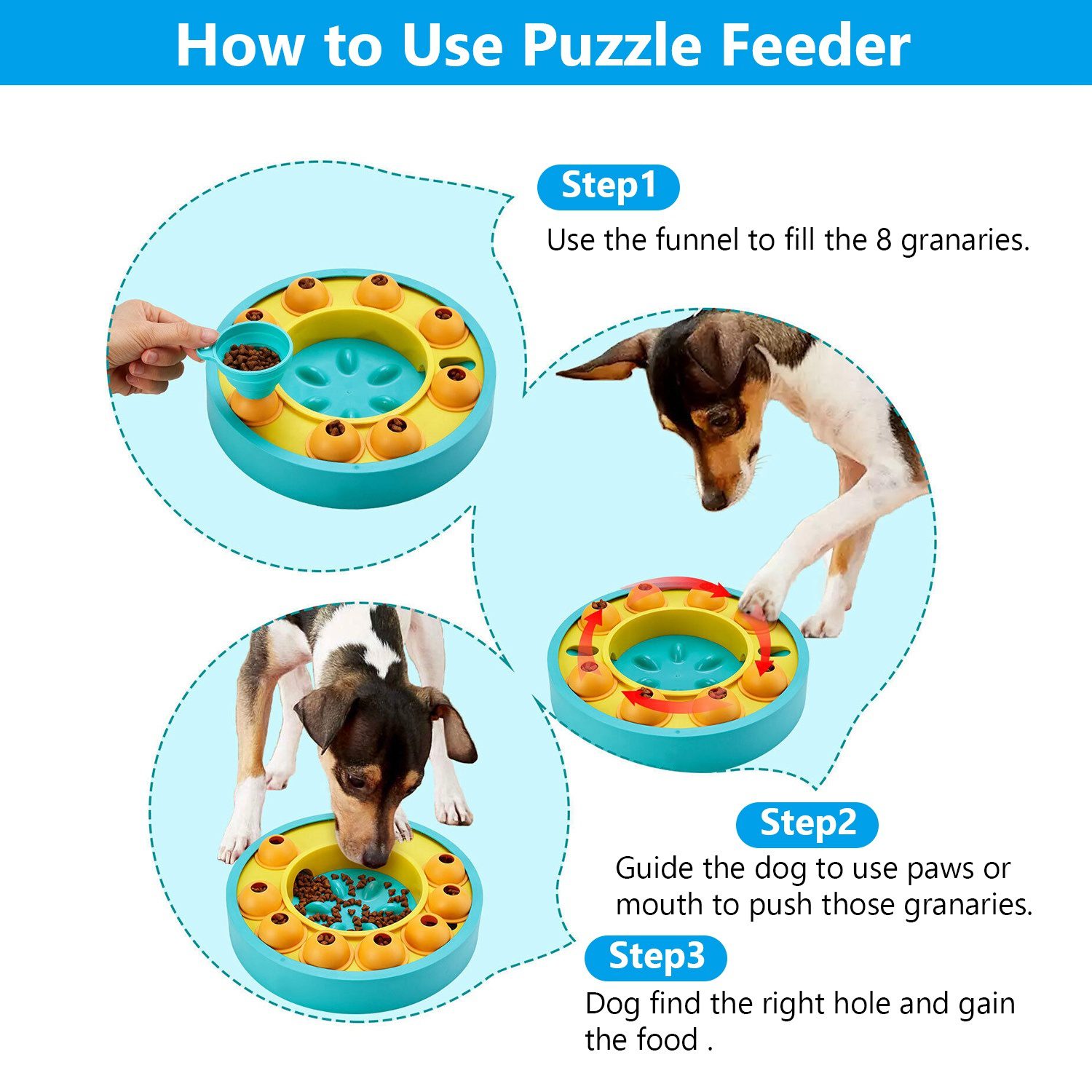
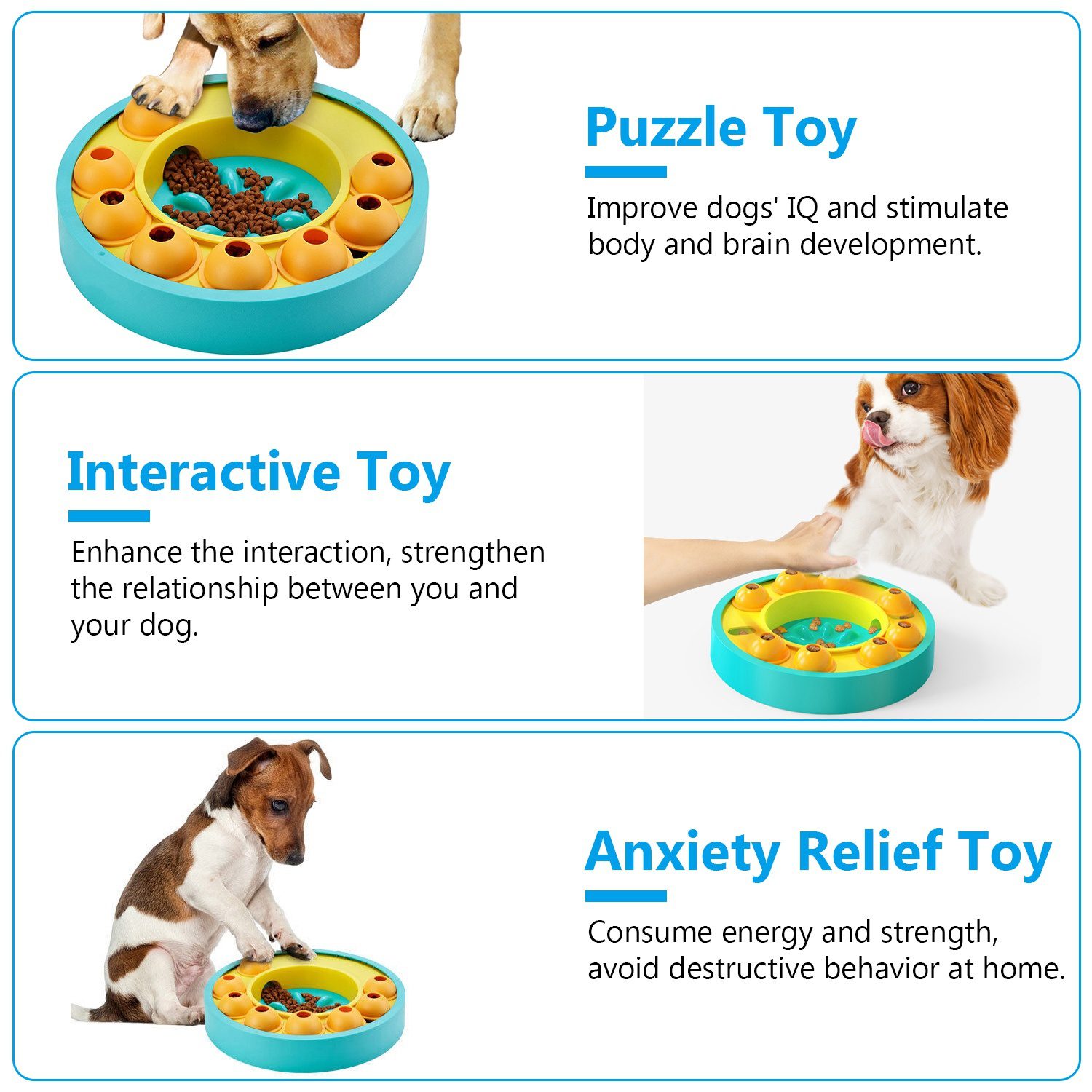
Fill it with your dog’s regular kibble. Watch them spend the next 15 to 25 minutes working, problem-solving, sniffing, sliding, nudging, and thinking their way to every last piece. By the time the bowl is empty, they are mentally spent in the most satisfying way possible — the calm, contented tiredness of a brain that has done exactly what it was built to do.
This is not a gimmick. It is neuroscience applied to dinnertime.
Why Your Dog’s Brain Needs This More Than Their Body Does
The domestic dog’s brain evolved over tens of thousands of years to spend the majority of its waking hours working — tracking, hunting, problem-solving, foraging. The average indoor pet dog gets a bowl placed in front of them that empties in under two minutes.
This is a profound mismatch between what the canine brain was built for and what it actually gets. And that mismatch has a name: chronic under-stimulation. It is one of the primary drivers of:
- Boredom-based destructive behavior — chewing furniture, digging, scratching
- Demand barking and attention-seeking — a brain looking for stimulation from the only source available
- Anxiety and restlessness — a nervous system that cannot settle because it never fully engages
- Hyperactivity — energy that has nowhere productive to go
The puzzle feeder does not just slow eating. It engages the exact cognitive systems that, when left idle, generate the behaviors most pet parents are trying to solve.
Veterinary behaviorist Dr. Karen Overall, MA, VMD, PhD, DACVB, has described mental enrichment as “one of the most underutilized and undervalued therapeutic tools in canine behavioral medicine.” The puzzle feeder is that tool, built into your dog’s existing daily routine — no extra time required.
How It Works — Three Levels of Challenge
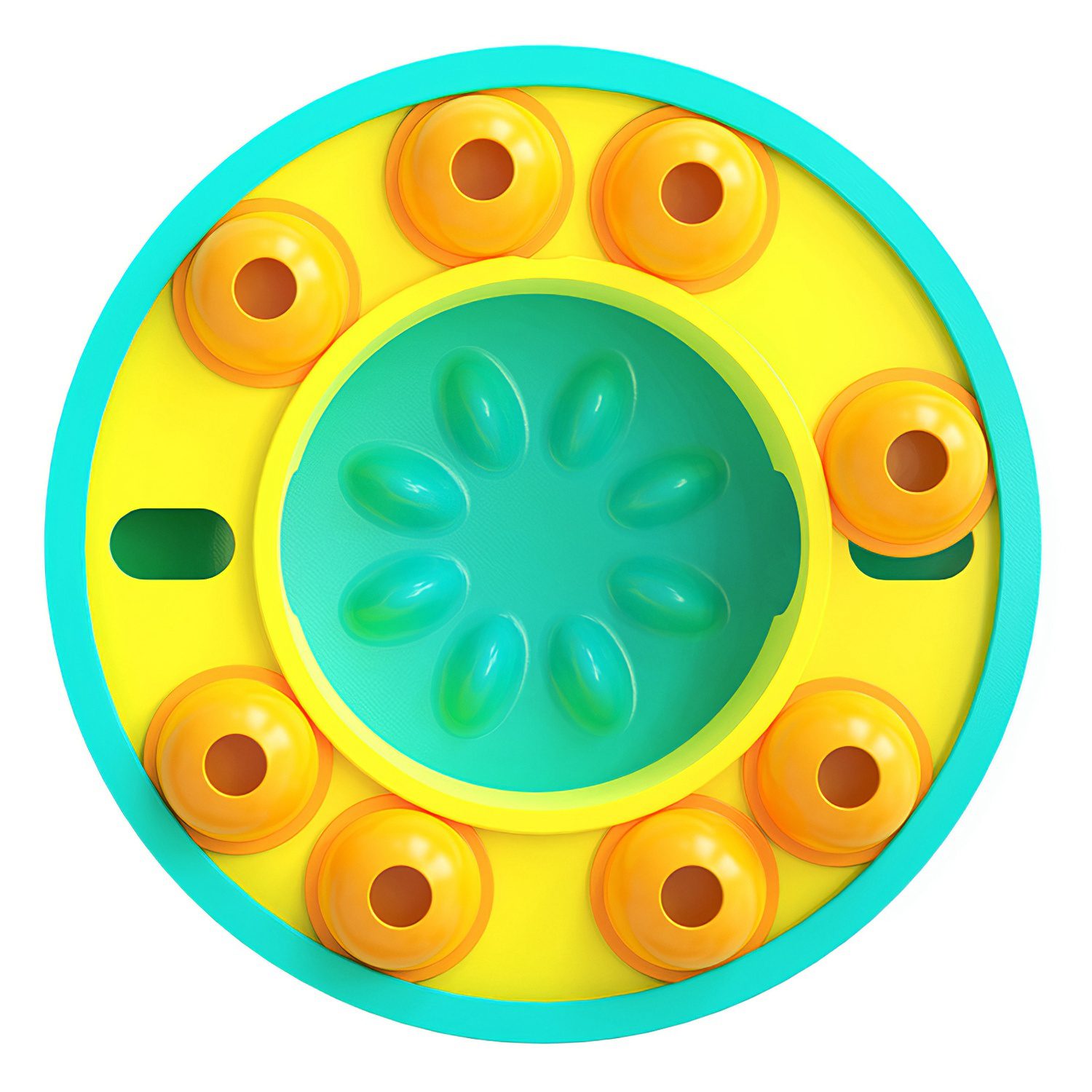
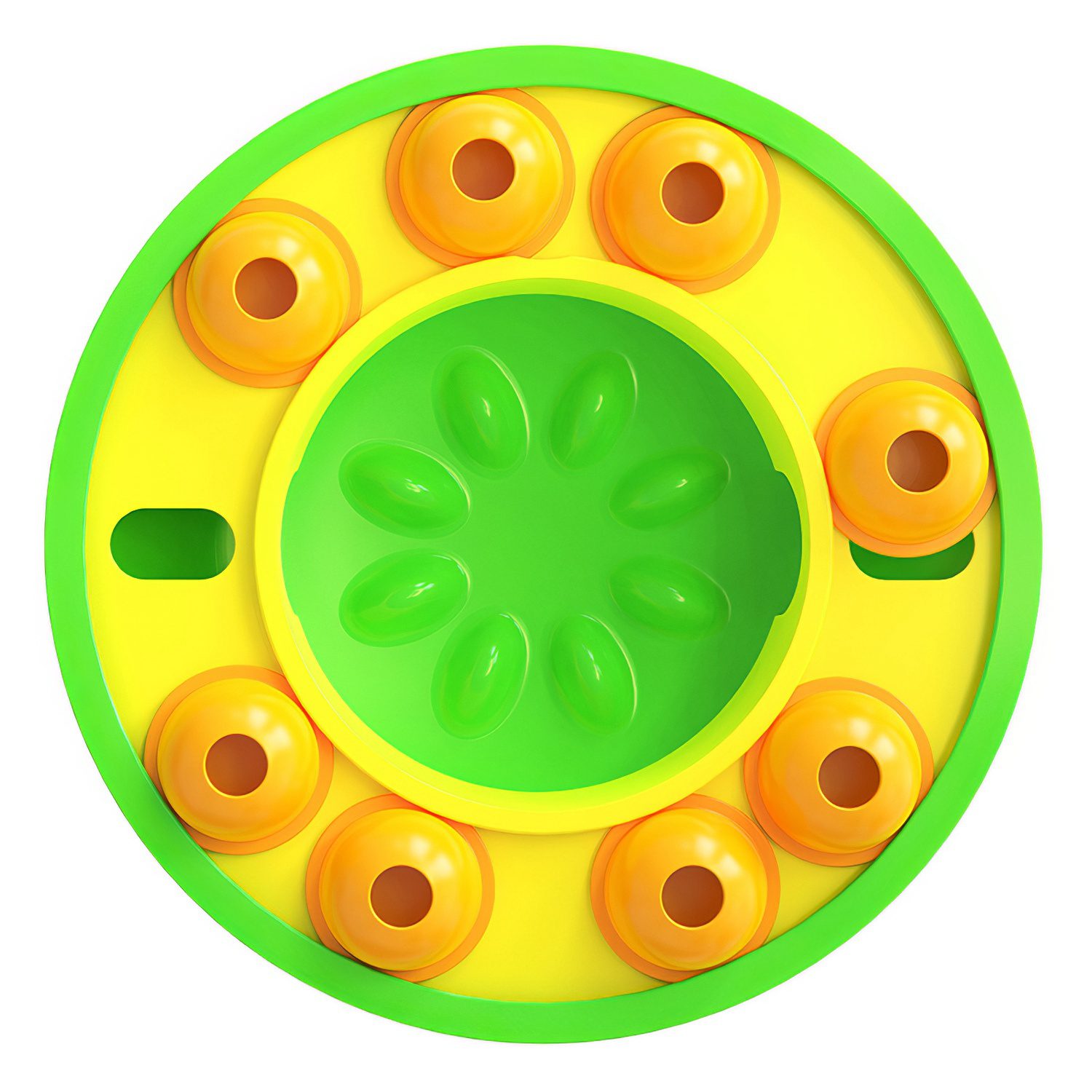
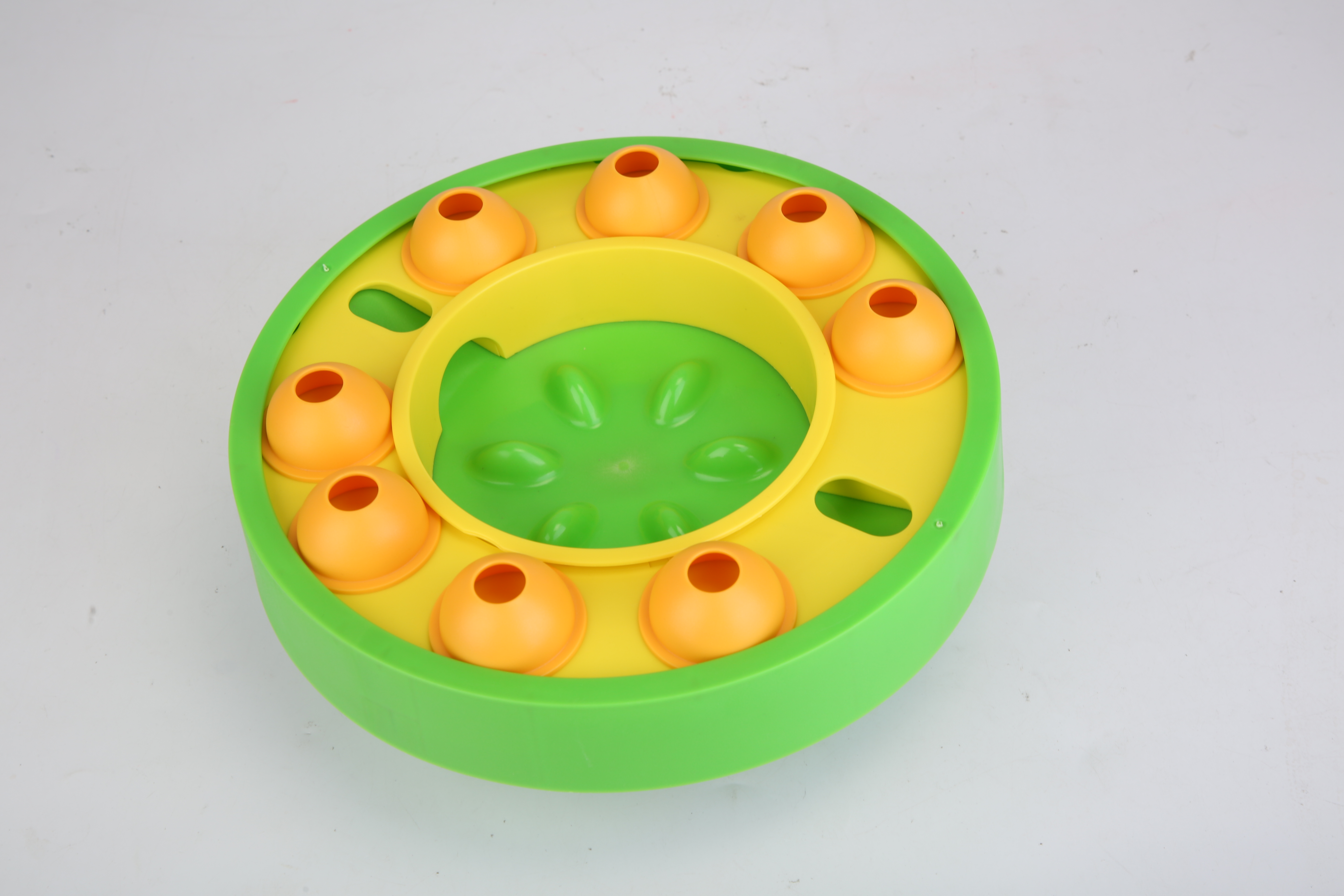
Our puzzle feeder features three distinct challenge zones designed for progressive difficulty:
Zone 1 — Beginner Channels: Wide, open grooves and channels that hold kibble loosely. Ideal for introducing your dog or cat to puzzle feeding. Most pets solve this zone within the first session.
Zone 2 — Intermediate Compartments: Deeper, partially covered compartments that require your pet to nose or paw the food into a position where it can be retrieved. Requires problem-solving rather than simple licking.
Zone 3 — Advanced Hidden Chambers: Fully enclosed chambers with small openings that require deliberate paw and nose manipulation to access. Provides the highest level of cognitive engagement and the longest meal duration.
For beginners: Start with only Zone 1 filled. Let your pet master it easily and enjoy the success. Gradually introduce Zones 2 and 3 over successive meals as confidence builds.
For experienced puzzle feeders: Fill all three zones simultaneously. The strategic challenge of deciding which zone to tackle first is itself a form of executive function training.
The Anxiety Connection — Why This Works for Anxious Pets
The calming effect of puzzle feeding is not incidental — it is neurochemical.
When a dog engages in foraging behavior, the brain releases dopamine through the mesolimbic reward pathway — the same system activated by any genuinely satisfying experience. This dopamine release:
- Suppresses cortisol — the primary stress hormone driving anxiety
- Activates the “seeking” state — a calm, focused, positive neurological mode
- Depletes the arousal energy that feeds restlessness and anxiety when left unspent
Research published in Applied Animal Behaviour Science confirmed that dogs given regular cognitive enrichment activities — including puzzle feeders — showed measurable reductions in anxiety-related behaviors and cortisol markers within two weeks of consistent daily use.
For separation anxiety specifically, the puzzle feeder used at the morning meal — 30 to 60 minutes before your departure — depletes the anxious mental energy that would otherwise peak the moment you leave.
Slow Feeding Benefits Beyond Anxiety
Prevents bloat (GDV): Large and deep-chested breeds (German Shepherds, Great Danes, Labradors, Golden Retrievers, Standard Poodles) are at elevated risk of gastric dilatation-volvulus (bloat) — a life-threatening condition directly linked to fast eating and air ingestion. A puzzle feeder that extends meal time from 90 seconds to 20 minutes significantly reduces this risk.
Improves digestion: Food consumed slowly is mixed more thoroughly with saliva, activating digestive enzymes more effectively. Reduced gulping means less air ingestion, less gas, and better nutrient absorption.
Maintains healthy weight: Slower eating allows the brain’s satiety signals — particularly leptin and cholecystokinin — time to register fullness before the meal is complete. Dogs who eat slowly from enrichment feeders consistently show better weight management than those eating from standard bowls.
Reduces regurgitation: Dogs who eat very fast frequently regurgitate partially undigested food — particularly in puppies and brachycephalic breeds. The puzzle feeder’s natural pacing eliminates this issue for most fast eaters.
What Makes PawCalmHub’s Puzzle Feeder Different
Food-grade, non-toxic materials: Every surface your pet contacts is manufactured from food-grade materials — BPA-free, phthalate-free, and safe for daily use. No concern about what is leaching into your pet’s food or what they are mouthing during the session.
Non-slip base: A rubberized base grips hardwood, tile, and laminate floors firmly — preventing the bowl from sliding across the room as your dog works it enthusiastically. No chasing the bowl. No food scattered across the floor.
Works for both dogs and cats: The multi-zone design works equally well for cats, who engage the puzzle through paw manipulation rather than nose-work. Particularly effective for indoor cats who need cognitive stimulation to manage boredom-related anxiety.
Dishwasher safe: Top rack, any standard cycle. Or handwash with warm soapy water — every groove and channel is accessible for thorough cleaning. No food residue build-up in hidden corners.
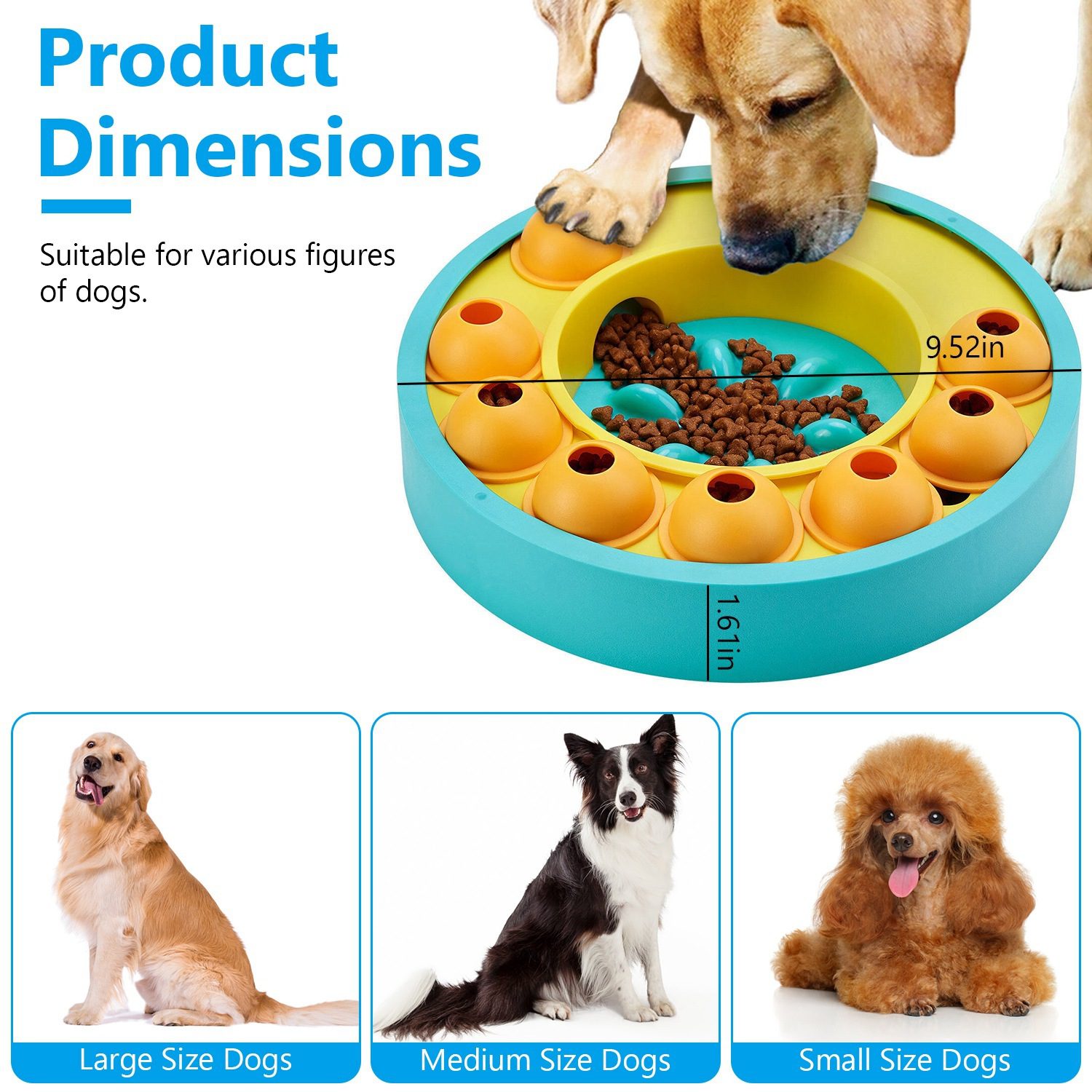
Suitable for all sizes: Small dogs and cats use the shallow channels and retrieve kibble or treats with ease. Medium and large dogs engage all three zones simultaneously for a full cognitive workout.
Works with any food type:
- Dry kibble — most common use
- Semi-moist food — fills grooves and creates a lick-based challenge
- Freeze-dried treats — premium enrichment option
- Small training treats — ideal for high-value reinforcement sessions
- A combination of food types across different zones — the most engaging option
Best Ways to Use Your Puzzle Feeder
Daily meal replacement: Replace your dog’s standard bowl entirely with the puzzle feeder for one or both daily meals. This is the highest-impact approach for anxious, bored, or over-eating dogs.
Departure enrichment: Fill with your dog’s regular kibble or high-value treats and present exclusively at departure time. The positive feeding experience creates a counter-association with your leaving — over time, your dog begins to anticipate your departure positively rather than anxiously.
Pre-nap mental depletion: A puzzle feeder session 20–30 minutes before crate time or a planned rest period depletes mental energy and makes settling significantly easier for high-energy or anxious dogs.
Vet visit preparation: Fill with soft food or high-value treats and bring to veterinary appointments. The foraging behavior suppresses the cortisol response during waiting and examination — in the same way our Lick Mat does, but with extended engagement time.
Training reinforcement: Use a portion of your dog’s daily food allowance in the puzzle feeder as a training session reward — the sustained engagement is more reinforcing than a single treat for food-motivated dogs.
Multi-pet households: Provide one puzzle feeder per pet during mealtimes — supervised. Competition over a shared feeder increases stress rather than reducing it.
Introducing the Puzzle Feeder — Getting It Right From Day One
The most common mistake is making the first session too difficult. A dog who cannot solve the puzzle in their first encounter develops frustration rather than engagement.
Session 1 — Easy mode: Fill only the widest, shallowest channels. Scatter a few pieces of kibble openly on the surface beside the channels. Let your dog eat the easy pieces first and discover the channels naturally. End the session feeling successful.
Sessions 2–5 — Building confidence: Fill all shallow zones. Remove the openly scattered pieces. Let your dog work the full surface area. Add gentle encouragement but never guide their paws — discovery learning is the cognitive engagement you are targeting.
Session 6+ — Full challenge: Introduce the deeper compartments. Vary which zones you fill to create daily novelty. Consider mixing kibble with a small number of high-value treats distributed randomly through all zones — the variable reward schedule is maximally engaging for the canine brain.
For cats: Introduce in a completely calm, private space. Use wet food in the shallow channels initially — the scent engagement motivates initial investigation faster than dry kibble. Progress to dry food or treats as your cat learns the mechanical challenge.
What Pet Parents Are Saying
“My Labrador used to inhale his food in literally 40 seconds and then spend the next four hours demanding attention and destroying things. This feeder changed our entire dynamic. He works his meal for 20 minutes and then genuinely settles for a nap. I wish I had found this two years ago.” — Kevin T., Dallas TX ⭐⭐⭐⭐⭐
“I bought this for my anxious rescue who had terrible separation anxiety. I give it to her when I leave, filled with her breakfast. My neighbor used to text me about the barking. She has not texted me in three weeks. A puzzle bowl did what six months of other attempts could not.” — Melissa R., Chicago IL ⭐⭐⭐⭐⭐
“My two cats were initially confused but within three days they were both running to the feeder at meal time. One of them is a bored indoor cat who was over-grooming — her grooming has reduced noticeably since we added the puzzle feeder to her daily routine. I did not expect that at all.” — Jamie L., Portland OR ⭐⭐⭐⭐⭐
“The non-slip base is the thing that makes this worth buying over cheaper alternatives. My previous puzzle bowl slid across the kitchen every time my Boxer touched it. This one does not move at all. Clean-up is also genuinely easy — everything comes off in the dishwasher.” — Sandra M., Atlanta GA ⭐⭐⭐⭐⭐
“I am a veterinary technician and I recommend puzzle feeders to clients routinely for fast eaters and anxious dogs. This one specifically I recommend because the three difficulty levels mean it grows with the dog — you are not buying a new one every few months. The material quality is also clearly above the average.” — Rachel P., RVT, Phoenix AZ ⭐⭐⭐⭐⭐
The PawCalmHub Enrichment System — Maximum Results When Combined
The puzzle feeder works powerfully on its own. Combined with the rest of the PawCalmHub enrichment system, it becomes part of a complete daily anxiety management protocol:
Morning meal → Puzzle Feeder Cognitive engagement and dopamine release to start the day
Pre-departure → Snuffle Mat Nose-work session that depletes anxious departure energy
Acute stress moments → Lick Mat Endorphin release within 60 seconds for storms, vet visits, grooming
Daily supplement → Hemp Calming Chews Neurochemical baseline management through hemp extract, L-theanine, and melatonin
Each tool addresses a different layer of the anxiety cycle. Together they create a comprehensive, natural anxiety management system built into your pet’s existing daily routine.
Size Guide
| Pet Size | Weight | Recommendation |
|---|---|---|
| Small dogs and cats | Under 20 lbs | All zones accessible — use smaller kibble or treats for best engagement |
| Medium dogs | 20–50 lbs | Ideal fit — all three zones provide appropriate challenge |
| Large dogs | 50–90 lbs | Works well — non-slip base handles enthusiastic larger dogs |
| Giant breeds | 90 lbs+ | Works for feeding but consider a raised platform for comfortable access |
Care Instructions
- Dishwasher safe: Top rack, any cycle
- Handwash: Warm water, dish soap, soft brush into all grooves — rinse thoroughly
- Inspect regularly: Replace if any zone shows cracking or pieces breaking away
- Frequency: Clean after every wet food or semi-moist food use. Dry kibble use can alternate daily cleaning with weekly deep clean
- Storage: Nest with other enrichment tools in a designated pet enrichment drawer — rotating tools between sessions maintains novelty
Our Guarantee
Every product on PawCalmHub is backed by our 30-day satisfaction guarantee. If the puzzle feeder does not make a visible difference to your dog’s eating pace, mental engagement, or anxiety within 30 days of consistent daily use — contact us and we will make it right.
Free US shipping on all orders. Arrives in 5–8 business days to all 50 states.
Questions about which enrichment tool is right for your dog’s specific anxiety type? Email us at hello@pawcalmhub.com — we respond within 24 hours and genuinely love helping pet parents find the right solution.
Frequently Asked Questions
Q: Can I use wet food in the puzzle feeder? A: Yes — wet food, pâté-style food, and semi-moist treats all work well in the puzzle feeder. Spread across the surface zones for a lick-based challenge. Clean thoroughly after wet food use to prevent bacteria buildup in the grooves.
Q: My dog gets frustrated and gives up. What should I do? A: The difficulty level is too high for your dog’s current experience. Return to the easiest mode — wide open channels only, a few pieces scattered openly on the surface. Let them succeed easily for 3–5 sessions before introducing any challenge. Confidence must be built before difficulty is increased.
Q: Can I use the puzzle feeder as my dog’s only bowl? A: Yes — many pet parents replace the standard bowl entirely. Use the full daily food allowance across the puzzle feeder, divided between one or two meals. Ensure fresh water is always available separately.
Q: Is this suitable for puppies? A: Yes — puzzle feeders are beneficial from weaning age onward. Use the shallowest zone only and use appropriately sized food for your puppy’s age. Supervised use is recommended for puppies who may attempt to mouth or chew the feeder itself.
Q: Will this really help my dog’s separation anxiety? A: The puzzle feeder specifically addresses the boredom and under-stimulation component of separation anxiety. For dogs whose anxiety is primarily attachment-based, it works best as one layer of a broader approach that includes departure desensitization, calming supplements, and consistent routine. Read our full separation anxiety guide for the complete protocol.
Q: My cat has never used an enrichment toy. How do I get them started? A: Put a small amount of their most loved food — tuna in water, wet food, or a strong-smelling treat — in the shallowest channel only. Let them investigate entirely on their own terms in a quiet space. Never force interaction. Most cats engage within 1–3 sessions once they understand that food is inside.
PawCalmHub — pawcalmhub.com Free US Shipping · 30-Day Guarantee · Ships in 5–8 Business Days
*Specifications*:
- Product Type: Dog Food Puzzle Feeder
- Material: PP
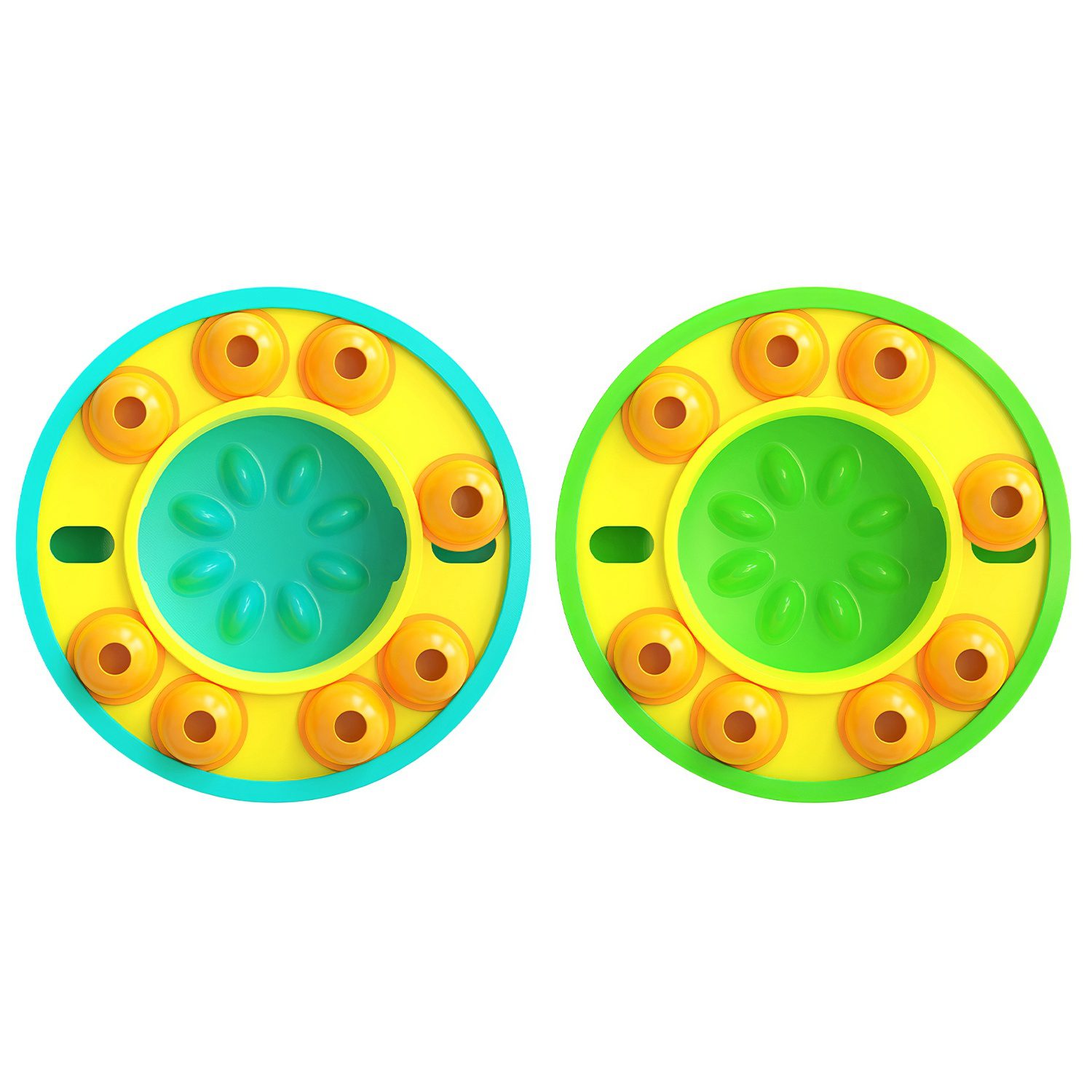
- Color Option: Green, Blue
- Item Size: 24.2×24.2×4.1cm/9.52×9.52×1.61in
- Item Weight: 416g/0.91lbs
- Package Size: 26*25*6.5cm/10.23×9.84×2.55in
- Package Weight: 538g/1.18lbs
*Package Lists*:
- 1x Dog Food Puzzle Feeder
- 1x Funnel
- 1x User Manual
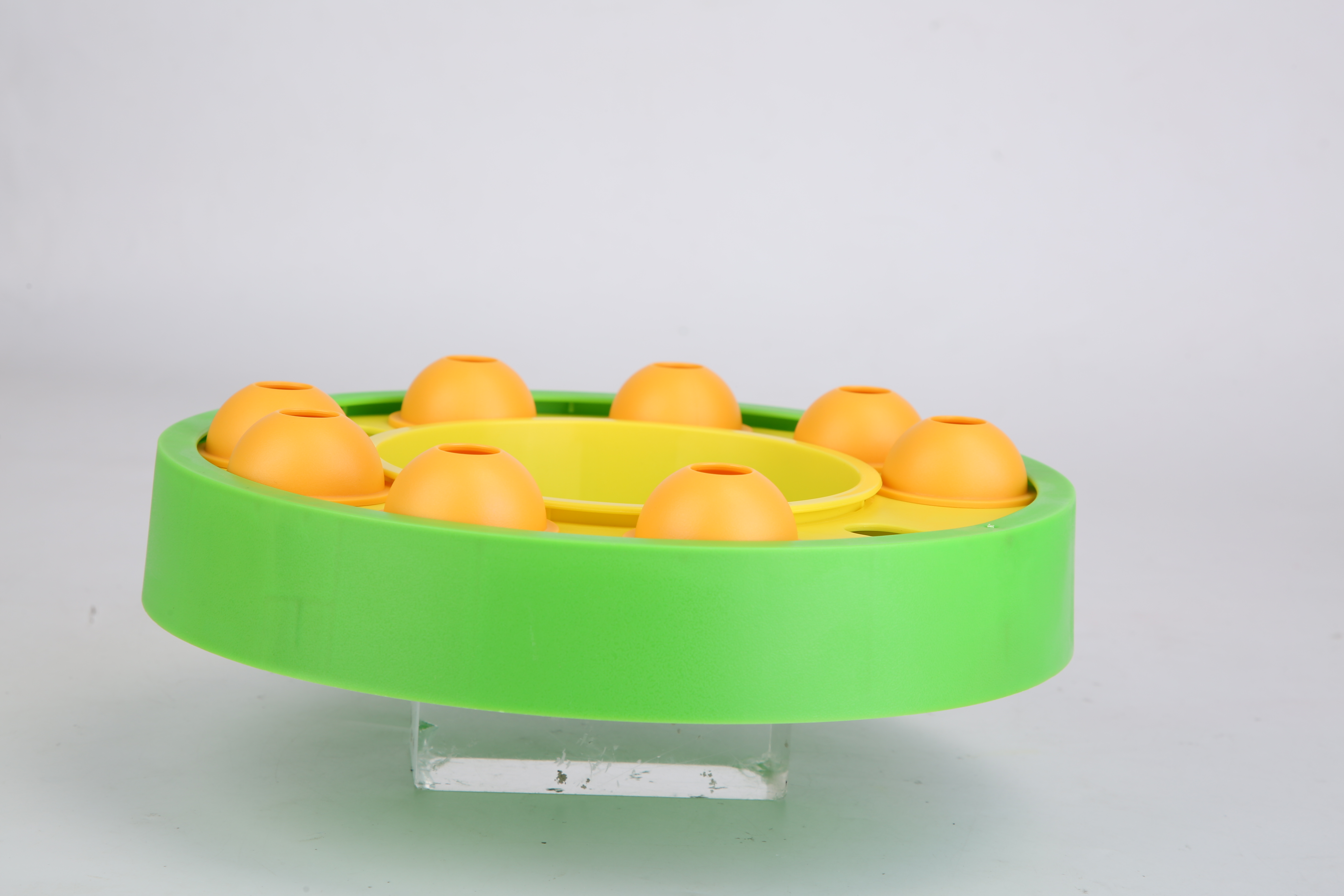
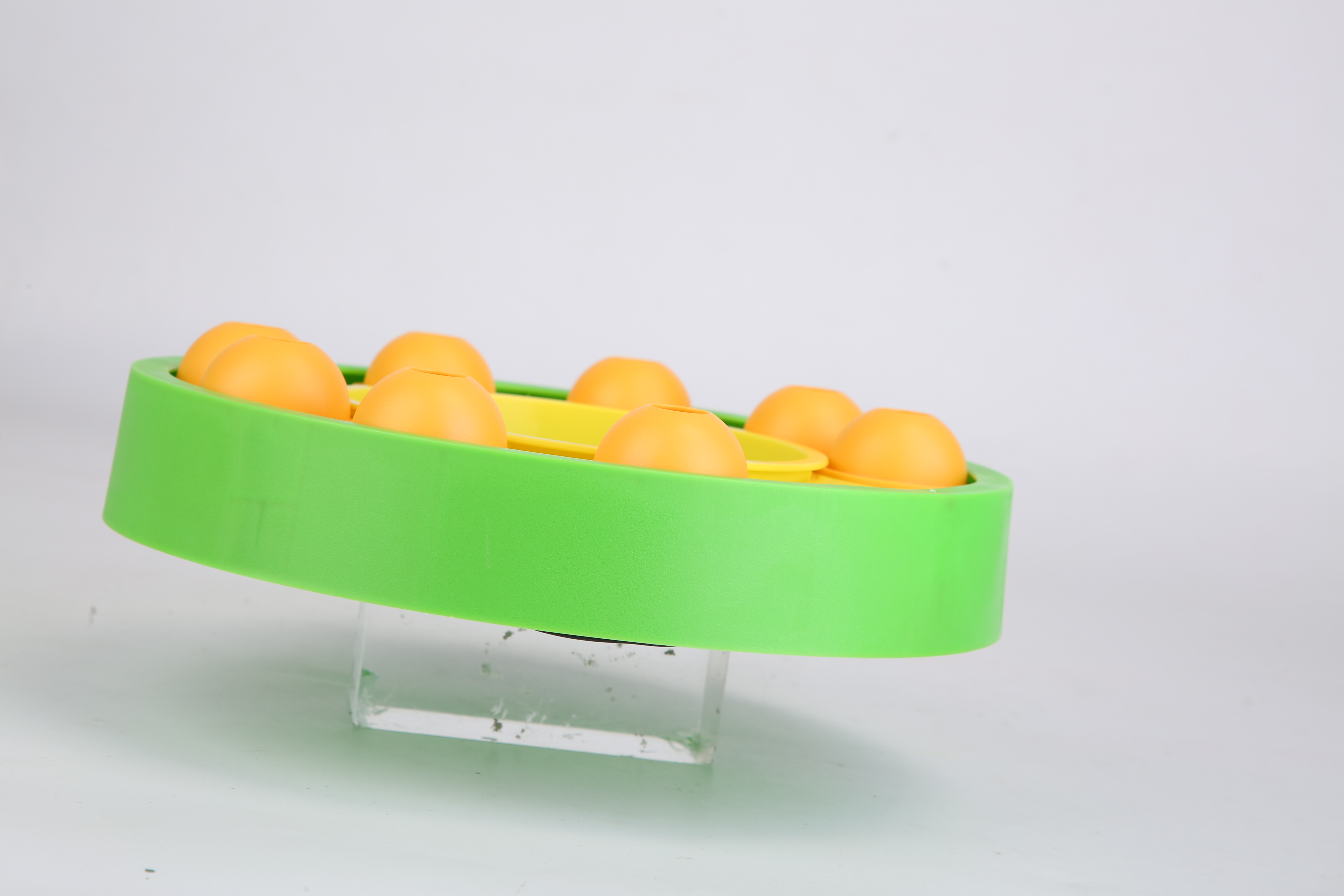
Actual Product Photo
Reviews
There are no reviews yet.