
Estimated read time: 22 minutes | Last updated: 2025
A note on this guide: This is the most comprehensive product assessment in the PawCalmHub library — covering 30 tools across three evidence tiers, a Zero-Cost section, and an honest assessment of products that are not worth your money. PawCalmHub sells several of the products reviewed here. We have noted this transparently wherever relevant. The evidence tier assessments are based on published veterinary and behavioural science research and are structured to be useful regardless of where or whether you purchase.
Here is the sentence that no pet anxiety product guide ever leads with — but that every pet anxiety product guide should:
You do not need to spend money to start helping your anxious pet.
The most powerful anxiety management tool available to any dog or cat owner is free. It costs nothing to purchase, nothing to maintain, and nothing to replace. It is the consistent daily routine that tells a pet’s nervous system: the world is predictable, and therefore the world is safe.
Everything else in this guide — the 30 tools, the evidence tiers, the product comparisons — sits on top of that foundation. Without it, no product works as well as it should. With it, even the most modest tool produces meaningful benefit.
This guide is structured in four sections. The Zero-Cost Toolkit comes first — because it builds the trust that genuine advice earns, and because it is the most important section for any owner regardless of budget. Then the three evidence tiers, moving from the strongest research base to the most emerging. Then the honest section: five products that are not worth your money despite their marketing. Then a starter stack guide that translates the evidence into practical purchasing decisions at three budget levels.
The Zero-Cost Toolkit — What Works Before You Spend a Pound
This section is built on a principle: the best pet anxiety resources do not open with a product. They open with the truth that the most important interventions are behavioural and environmental — and they are free.
Zero-Cost Tool 1: The Consistent Daily Routine
Research on canine stress and environmental predictability identifies routine disruption as one of the primary drivers of anxiety in domestic dogs. Cats show similar physiological responses to routine inconsistency — Buffington’s Indoor Cat Initiative research at Ohio State University consistently identifies predictable routine as the single highest-impact welfare intervention for indoor cats.
Same wake time. Same feed time. Same walk time. Same sleep arrangement. Every day. The cost: zero. The anxiety management impact: measurable within two weeks in the majority of anxious dogs and cats.
Zero-Cost Tool 2: The Old Sock Scent Anchor
Take a clean cotton sock — or any small piece of cotton fabric — and rub it vigorously along your hands, forearms, and neck for 30 seconds. You have now created a scent anchor carrying your personal chemical signature.
Place this item in your pet’s primary resting spot, inside their carrier before a stressful event, in the car during travel, at the vet clinic on the examination table, or in any new environment before your pet enters it.
You are deploying the same olfactory mechanism that expensive pheromone diffusers and commercial scent products use — your own, specific, deeply familiar scent — at zero cost. For most dogs and cats who are anxious about owner absence or novel environments, a worn, unwashed owner garment or a scent-rubbed sock provides more olfactory reassurance than any synthetic pheromone product, because your specific individual scent is the safety signal they have been learning since they came to live with you.
The old sock protocol in practice:
For separation anxiety: leave a worn sock in the dog’s bed when you depart. Replace every 2–3 days with a freshly worn one — scent fades, but the sock takes 30 seconds to refresh.
For veterinary visits: place a worn sock on the examination table before the examination begins. Ask the vet whether you can do this — most Fear Free practitioners actively welcome it.
For crate anxiety: a worn garment draped over the covered crate provides the olfactory owner-presence that makes the enclosed space feel safe rather than abandoned.
For rescue animals in the first weeks: a worn sock in the anchor room provides olfactory familiarity before the animal is ready for physical proximity.
Zero-Cost Tool 3: The Slow, Sniff-Led Walk
Research published in Applied Animal Behaviour Science documents that nose-work activities — including unstructured sniff-led walking — produce greater reductions in pessimistic cognitive bias (a validated anxiety marker in dogs) than equivalent amounts of physical exercise alone.
A 15-minute walk where the dog leads, sniffs freely, and sets the pace produces more anxiety reduction than a 30-minute brisk walk where the owner sets the pace and limits sniffing. The difference is the olfactory enrichment — foraging for information through scent activates the seeking system of the brain, which is neurologically incompatible with the anxiety response.
Cost: zero. It is the same walk, walked differently.
Zero-Cost Tool 4: The Frozen Kong — The DIY Lick Mat
Before purchasing any commercial calming product, fill a Kong toy (or any hollow rubber toy) with your dog’s wet food, peanut butter (xylitol-free), plain Greek yoghurt, or mashed banana. Freeze for 4+ hours. You have created a lick-mat equivalent that provides the same oral motor soothing mechanism — repetitive licking activating the parasympathetic nervous system — at the cost of the food already in your refrigerator.
For cats: freeze wet food in a small dish and allow to thaw to a lick-able slush consistency. Most cats will lick at the semi-frozen surface in a way that provides the same oral motor calming stimulus.
Zero-Cost Tool 5: The Cardboard Box Den
A medium cardboard box with one side removed, placed in a low-traffic corner of the home with a familiar blanket inside, provides the enclosed, proprioceptively contained den environment that the canine and feline nervous system categorises as safe. The cardboard box den is the zero-cost version of the covered crate, the cat hiding box, and the safe room concept — available immediately, at no cost, from any online delivery.
For cats specifically: a cardboard box is one of the most effective immediately available anxiety management tools in existence. A cat who has a cardboard box to press into during a stressful event (visitor, renovation noise, thunder) has access to the den psychology that their nervous system uses to self-regulate under threat.
Zero-Cost Tool 6: The Brown Noise Playlist
YouTube, Spotify, and most major streaming platforms carry free brown noise, white noise, and specifically designed pet-calming audio (search “Through a Dog’s Ear” on YouTube for free samples). Playing continuous low-frequency ambient sound through a phone or tablet speaker placed near the pet’s resting area masks the unpredictable environmental sounds that trigger the startle response and maintain the anxiety arousal cycle.
Cost: zero, assuming a phone or tablet already in use. Effect: documented reduction in anxiety-related behaviours in kennelled dogs through the same acoustic masking mechanism as commercial white noise machines.
Zero-Cost Tool 7: The Furniture Scent Map
When introducing a pet to a new environment — a new home, a new room, a new piece of furniture — rub the surfaces at pet nose height with a worn sock carrying your scent before the animal has access. This pre-seeds the new environment with the familiar safety signal of owner scent, reducing the neophobic threat response that blank, unknown surfaces produce.
The furniture scent map is the zero-cost version of DAP pheromone diffusers and Feliway sprays — it uses your specific, individually recognised scent rather than a species-typical pheromone analogue, and for most pets who are anxious specifically about owner absence or owner-attachment security, it is more effective.
Tier 1 — Strong Evidence: Use With Confidence
These tools have a peer-reviewed evidence base in dogs and/or cats, published in recognised veterinary or behavioural science journals, with consistent findings across multiple studies or with single well-designed trials of sufficient quality.
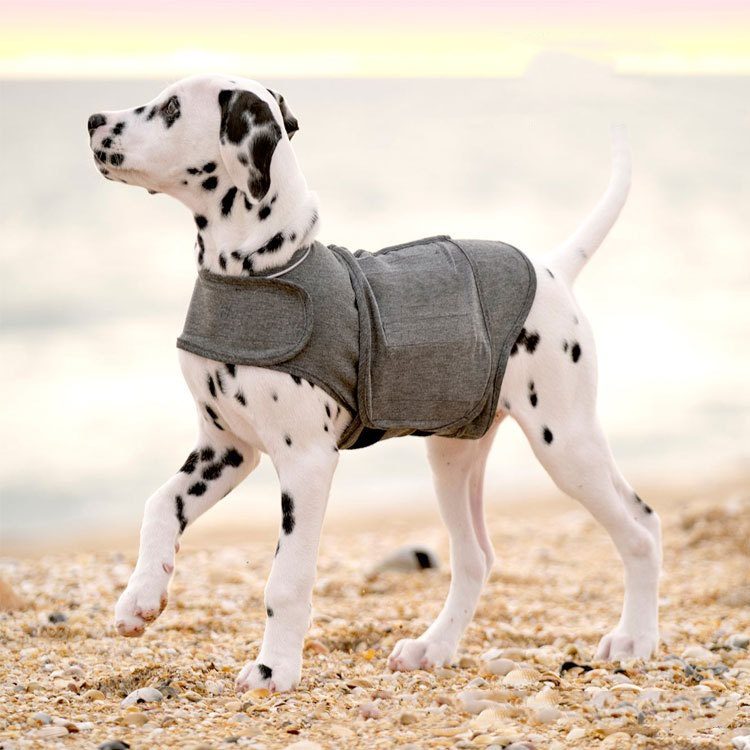
1. Anxiety Pressure Vests [Dogs]
Evidence: The Cottam and Dodman 2013 open-label trial, published in the Journal of Veterinary Behavior, documented 89% owner-reported partial effectiveness for thunderstorm phobia after five uses. Additional cortisol-level research published in the Journal of Veterinary Behavior documented measurable reduction in salivary cortisol in anxious dogs wearing pressure wraps during storm simulation.
Mechanism: Deep-touch pressure stimulation activating the parasympathetic nervous system through mechanoreceptor pathways.
Best for: Thunderstorm phobia, fireworks anxiety, travel anxiety, veterinary visit anxiety. Applied 15–20 minutes pre-trigger, never mid-panic.
Critical use condition: Must be introduced positively over 7 days before first anxiety-event use. Vest applied for the first time during a crisis will not work and may create a negative association.
Shop: Dog Anxiety Vest
Read more: Do Dog Anxiety Vests Actually Work?
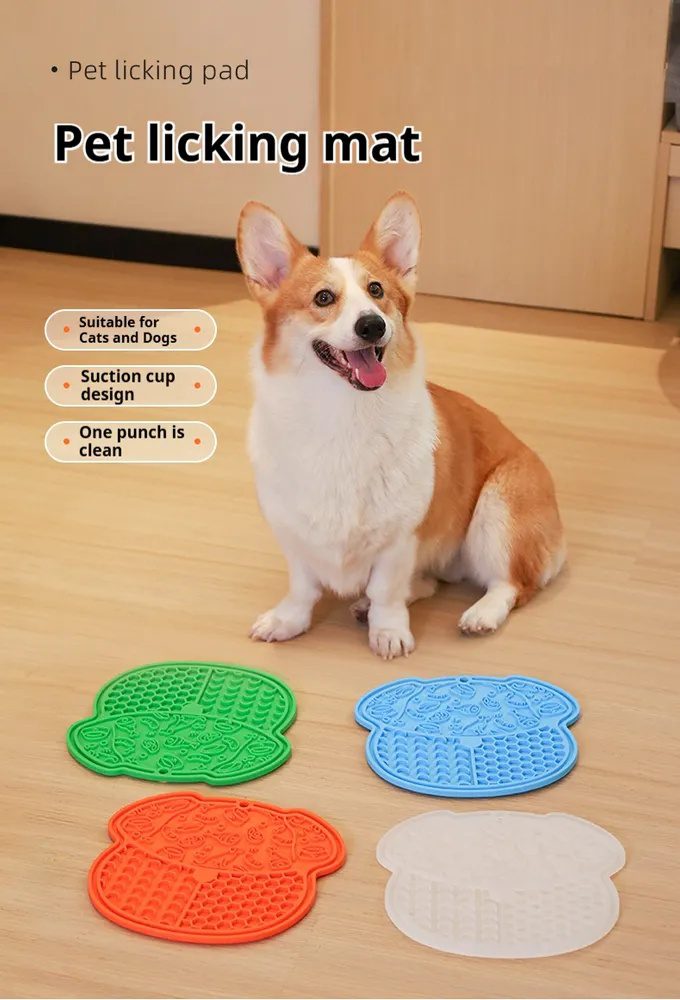
2. Lick Mats [Dogs and Cats]
Evidence: Research on repetitive oral motor behaviour and autonomic nervous system regulation documents that sustained licking activates the parasympathetic nervous system through vagal nerve pathways, producing measurable cortisol reduction. Fear Free certification research documents that lick mat use during veterinary examinations significantly reduces restraint requirements and examination stress scores.
Mechanism: Oral motor repetitive licking producing parasympathetic activation; food reward creating positive counter-conditioning to anxiety-triggering contexts.
Best for: Veterinary visits, grooming sessions, separation anxiety departure moments, post-surgical recovery. Frozen and prepared in advance for maximum licking duration.
Shop: Lick Mat for Dog Anxiety
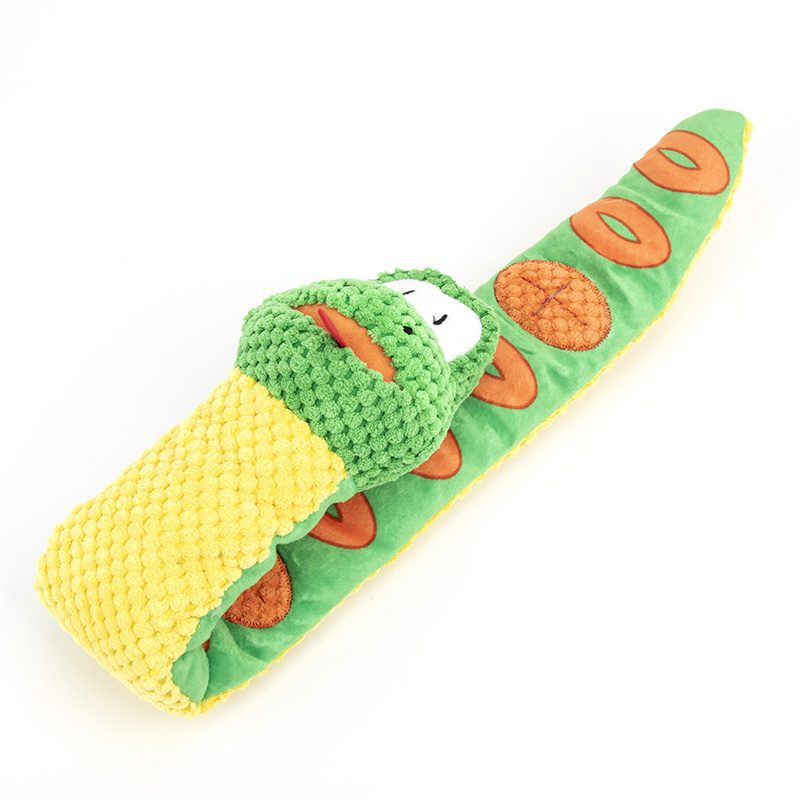
3. Snuffle Mats [Dogs]
Evidence: Research on nose-work and canine cognitive bias — a validated anxiety marker — documents significant reduction in pessimistic bias following regular nose-work enrichment. Applied Animal Behaviour Science research on olfactory enrichment consistently documents reduced anxiety-related behaviours in dogs following nose-work sessions.
Mechanism: Activation of the olfactory seeking system, which is neurologically incompatible with the anxiety response; dopamine release through foraging success; mental fatigue through cognitive engagement.
Best for: Daily anxiety maintenance, pre-trigger calming sessions, mealtime anxiety reduction, mental fatigue in high-drive breeds. Used at every meal as baseline management in anxious dogs.
4. Puzzle Feeders [Dogs]
Evidence: Research on food puzzle use in dogs documents reduced anxiety-related behaviours and improved optimism scores following regular food puzzle use. The cognitive engagement mechanism mirrors the olfactory engagement of snuffle mats through a different sensory modality.
Mechanism: Cognitive problem-solving producing mental fatigue; food reward creating positive arousal that competes with anxiety arousal; slowed eating reducing cortisol spikes from rapid ingestion.
Best for: High-drive, intellectually active dogs whose anxiety is partly driven by under-stimulation; mealtime anxiety management; post-surgical rest periods where physical activity is restricted.
5. Self-Warming Beds [Dogs and Cats]
Evidence: Thermoregulation research and veterinary physiology literature document the direct relationship between skin thermoreceptor activation by warmth and parasympathetic nervous system tone. The mechanism is among the most consistently documented in mammalian physiology.
Mechanism: Passive thermal comfort activating parasympathetic system through skin thermoreceptor pathways; den containment through bolster design; olfactory safety signal accumulation through regular use.
Best for: All anxious dogs and cats as baseline management; senior animals with arthritic pain; post-surgical recovery; cold-sensitive breeds.
Read more: Best Calming Beds for Anxious Dogs
6. Hemp Calming Chews [Dogs — Tier 1–2]
Evidence: Research published in Frontiers in Veterinary Science documented anti-anxiety effects of hemp CBD in dogs including measurable reductions in cortisol and anxiety-related behaviours. The endocannabinoid system is well-characterised in dogs, with CB1 and CB2 receptor distribution providing documented physiological targets for CBD modulation.
Mechanism: Endocannabinoid system modulation affecting cortisol regulation, GABAergic signalling, and serotonin receptor expression.
Best for: Daily generalised anxiety support (administered with meals); situational anxiety (administered 30–45 minutes pre-trigger); post-surgical recovery (after veterinary clearance for drug interactions).
Important: Discuss with your veterinarian before use, particularly if your dog is on other medications. Quality, dosing, and sourcing matter significantly — choose products with third-party testing and transparent CBD content labelling.
Read more: Do Calming Chews Work for Dogs?
7. Feliway Classic Diffusers [Cats — Tier 1]
Evidence: Multiple peer-reviewed trials — including a double-blind placebo-controlled study published in the Journal of Feline Medicine and Surgery — document that synthetic feline facial pheromone (F3 fraction) significantly reduces stress-related behaviours in cats including spraying, hiding, and inter-cat tension.
Mechanism: Synthetic analogue of the feline facial pheromone deposited during bunting; communicates territorial security and safety to the feline olfactory system.
Best for: Moving, multi-cat tension, environmental change, post-veterinary visit reintegration, general household stress. Replace refills every 30 days.
8. Quiet Nail Grinders [Dogs]
Evidence: The mechanism — removal of the sharp clip sound that is the primary auditory aversion trigger during nail care — is supported by research on canine sound sensitivity and consistent with the literature on auditory conditioning in anxious dogs. The sound elimination is not the same as general desensitisation but addresses the specific trigger that produces handling aversion during nail care.
Mechanism: Eliminates the auditory aversion trigger (sharp clip sound); allows nail maintenance without the negative auditory conditioning that repeating clip-based aversive experiences produces.
Best for: All anxious dogs who resist nail clipping; rescue dogs with handling histories involving aversive grooming; any dog whose nail anxiety has produced generalised handling aversion.
Read more: How to Groom an Anxious Dog at Home
Tier 2 — Moderate Evidence: Highly Recommended With Strong Mechanistic Support
These tools have a strong mechanistic rationale supported by related species research or high-quality owner-reported data, but lack the volume of direct dog/cat-specific randomised trials that Tier 1 tools have.
9. Grooming Gloves [Dogs and Cats]
Evidence: Research on oxytocin release through tactile stimulation in human-dog interaction documents mutual physiological benefit. The grooming glove provides systematic tactile stimulation that is less threatening to anxious animals than traditional grooming implements.
Best for: Rescue dogs with handling aversion, anxious cats resistant to traditional grooming, senior cats who can no longer self-groom, post-surgical tactile reassurance.
10. Treat Dispenser Toys [Dogs]
Evidence: Food-motivated play producing positive arousal that competes with anxiety arousal is well-supported in the behavioural enrichment literature. The specific mechanism of autonomous reward delivery — reward that does not require owner presence — addresses owner-dependency anxiety directly.
Best for: Separation anxiety management (deployed at departure moment), high-drive dogs during restricted-activity periods, building autonomous confidence in anxious dogs.
11. Automatic Ball Launchers [Dogs]
Evidence: The relationship between aerobic exercise and anxiety reduction in dogs is documented through the same mechanism as in humans — increased serotonin and dopamine availability, reduced cortisol, improved sleep quality following exercise.
Best for: High-drive breeds whose anxiety is partly driven by insufficient physical exercise; owners whose physical capacity limits their ability to provide adequate exercise; post-trigger calming (exercise after an anxiety event accelerates cortisol clearance).
Shop: Automatic Dog Ball Launcher and Automatic Dog Ball Launcher — Large Dogs
12. Smart Cameras with Two-Way Audio [Dogs and Cats]
Evidence: The primary evidence base is behavioural rather than physiological: remote monitoring allows accurate data collection on pet behaviour during owner absence, replacing assumption with evidence. Owner anxiety about what the pet is doing during absence contributes to the cortisol synchrony that elevates pet anxiety — accurate monitoring that reveals the pet is calmer than assumed reduces owner anxiety and through cortisol synchrony, pet anxiety.
Best for: Separation anxiety monitoring, multi-dog household conflict assessment, post-surgical recovery monitoring, new baby transition monitoring.
13. Adaptil (DAP) Diffusers [Dogs]
Evidence: Placebo-controlled research published in the Journal of Veterinary Behavior documents measurable anxiety reduction in dogs exposed to DAP-analogues. The dog appeasing pheromone mechanism — communicating maternal safety to the canine olfactory system — has a consistent if modest evidence base.
Best for: Multi-dog household tension, new dog introductions, generalised household stress. Works best combined with environmental management rather than as standalone.
14. Cat Tumbler Toys [Cats]
Evidence: Research on predatory play and feline welfare documents that regular predatory play reduces tension-related aggression in multi-cat households and reduces the anxiety energy that drives destructive and stress-related behaviours in indoor cats.
Best for: Multi-cat household tension reduction, indoor cat anxiety from frustrated predatory drive, senior cat cognitive engagement.
Shop: Cat Tumbler Toy Ball
15. L-Theanine Supplements [Dogs and Cats]
Evidence: Research on L-theanine and anxiety in humans is extensive; companion animal research is more limited but shows consistent anxiolytic direction. L-theanine promotes alpha wave brain activity and modulates glutamate receptors in a way that reduces anxiety without sedation.
Best for: Mild to moderate anxiety as a daily supplement; situational anxiety support alongside a calming chew formulation. Often included in multi-ingredient calming formulations.
16. Alpha-Casozepine [Dogs and Cats]
Evidence: Multiple peer-reviewed studies — including research published in the Journal of Veterinary Pharmacology and Therapeutics — document anxiety-reducing effects of alpha-casozepine (a milk-derived peptide) in both dogs and cats. Acts on GABA receptors similarly to benzodiazepines but without sedation or dependency.
Best for: Generalised anxiety and situational anxiety in both species. Available in Zylkene — a veterinary-grade supplement widely used as an alternative to pharmaceutical anxiolytics for mild cases.
17. Feliway Multicat [Cats — Multi-Cat Households]
Evidence: Double-blind trial published in the Journal of Feline Medicine and Surgery documented significant reduction in inter-cat tension behaviours in multi-cat households using Feliway Multicat versus placebo. Uses cat-appeasing pheromone (CAP) rather than facial pheromone.
Best for: Multi-cat household tension specifically. Not a substitute for Feliway Classic in single-cat moving or environmental stress situations.
Read more: Multi-Cat Household Stress
18. Orthopedic Beds for Senior Dogs and Cats [Tier 2]
Evidence: Pain-driven anxiety is the primary mechanism in senior animals, and the relationship between joint support, pain reduction, and secondary anxiety improvement is well-documented. Orthopedic support reduces pain and through pain reduction, reduces anxiety.
Best for: Senior dogs and cats with arthritis; post-surgical recovery; any animal whose anxiety has a documented pain component.
19. Through a Dog’s Ear Music [Dogs]
Evidence: Published research by Leeds and Wagner using the simplified classical arrangements specific to this series documented reduced anxiety behaviours in kennelled dogs. General classical music research shows more mixed results — the specific psychoacoustic engineering of this series is what the evidence supports, not classical music in general.
Best for: Safe room sound management, separation periods, storm events, in-car anxiety. Free samples available on YouTube before purchase.
20. Weighted Beds [Dogs — Tier 2]
Evidence: Human weighted blanket research is extensive and strongly positive. Dog-specific research is absent as of 2025. The mechanistic parallel is strong — same mechanoreceptor pathway, same deep-touch pressure mechanism. Plausible and worth trialling for dogs who respond well to the anxiety vest.
Best for: Vest-responsive dogs; dogs with generalised anxiety where constant pressure support may benefit; not appropriate for very small breeds or dogs who move frequently during sleep.
Tier 3 — Emerging or Situational: Discuss With Your Vet
21. Calming Collars (Pheromone-Infused)
Evidence: Variable. Some formulations show modest owner-reported benefit; independent controlled trials are limited. Quality control between products is highly variable — pheromone concentration and carrier materials differ significantly between brands.
Honest assessment: Worth trialling if the dog or cat is in environments where a diffuser is impractical (travel, outdoor time). Not a substitute for in-home diffusion where diffusers can be used.
22. CBD Oil (Liquid) [Dogs]
Evidence: Same endocannabinoid mechanism as chews but with faster absorption and more precise dosing. Frontiers in Veterinary Science research supports the mechanism; dog-specific controlled trials are emerging. Requires veterinary discussion — drug interactions with cytochrome P450 metabolism are more significant with oils than with lower-dose chews.
23. Melatonin [Dogs]
Evidence: Research on melatonin for noise phobia in dogs shows some positive findings; the evidence base is smaller than for other Tier 2–3 supplements. Most useful as a short-term sleep normaliser rather than an anxiety treatment.
Honest assessment: More useful for disrupted sleep patterns than for active anxiety events. Always discuss dose and formulation with your veterinarian — xylitol in some human formulations is toxic to dogs.
24. Thundershirts for Cats
Evidence: The deep-touch pressure mechanism that produces Tier 1 evidence in dogs has very limited direct research application in cats. Cats are highly variable in their tolerance of body coverage — many find the wrap aversive, which eliminates any potential benefit. Worth trialling only for cats who show no aversion to being handled and wrapped, and only with a 7-day positive introduction protocol identical to the dog vest protocol.
25. Valerian Root [Dogs and Cats]
Evidence: Limited but positive animal research on valerian root in the context of anxiety management. Commonly included in multi-ingredient calming formulations where its contribution is difficult to isolate. Not typically used as a standalone supplement.
5 Products That Are Not Worth Your Money
This section is what differentiates a genuinely useful guide from an affiliate marketing exercise. Every item below is widely marketed as a pet anxiety solution. None of them is supported by evidence sufficient to justify the purchase.
1. Generic “Calming” Collars With Proprietary Pheromone Blends
Products that claim to use “proprietary” pheromone formulations without disclosing specific compounds or concentrations cannot be evaluated for efficacy. The two pheromone systems with published evidence in dogs and cats are DAP (Adaptil) and feline facial pheromone (Feliway). Any product that does not use these specifically documented analogues has no established evidence base.
2. Ultrasonic Bark Deterrents
These devices produce high-frequency sound intended to deter barking. Research on the effects of ultrasonic deterrents on anxious dogs documents that unpredictable aversive stimuli increase rather than decrease anxiety in dogs with pre-existing anxiety disorders. An ultrasonic deterrent applied to an anxious barker adds an aversive, unpredictable stimulus to a nervous system already running at high arousal. This is the opposite of anxiety management.
3. Punishment-Based “Anxiety Training” Tools
Shock collars, spray collars, and citronella collars framed as anxiety management tools. The American Veterinary Society of Animal Behavior’s position statement explicitly rejects aversive training methods for anxiety because they increase cortisol, increase fear-based behaviour, and damage the human-animal bond — all of which worsen anxiety outcomes.
4. “Calming” Supplements With Undisclosed Dosing
Supplements that list active ingredients (L-theanine, valerian, hemp extract) without specifying the amount of each compound per serving cannot be evaluated for therapeutic relevance. A product containing 1mg of L-theanine per chew is not the same as one containing 100mg — both can be labelled as containing L-theanine. Purchase only products with full transparency of dosing per serving.
5. Priced “Calming Music CDs” Without Psychoacoustic Engineering
Standard classical music — however pleasant — does not have the peer-reviewed evidence base of the Through a Dog’s Ear series, which uses specific psychoacoustic engineering including simplified rhythmic patterns, reduced instrumentation, and specific frequency profiles designed around canine auditory processing. Any generic “classical music for dogs” product priced above the cost of free YouTube access is not providing the evidenced product.
The PawCalmHub Starter Stack — Building Your Toolkit at Three Budget Levels
🟢 Zero-to-$75: The Foundation Stack
Start here. This produces meaningful results for the majority of dogs and cats with mild to moderate anxiety.
Free: Daily consistent routine + worn-sock scent anchors + sniff-led walks + brown noise from phone speaker
Purchases: Snuffle mat ($18–25) + Lick mat ($12–18) + Hemp calming chews 30-day supply ($20–25)
Total spend: ~$50–70
What this gives you: Olfactory enrichment daily, parasympathetic oral motor activation for high-anxiety moments, baseline endocannabinoid system support, zero-cost environmental management foundation.
🔵 $75–$200: The Comprehensive Stack
The level at which all primary anxiety mechanisms are addressed.
Previous stack plus:
Self-warming anxiety bed ($35–50) + Dog anxiety vest ($35–45) + Grooming glove ($15–20)
Total spend: ~$165–235
What this adds: Continuous thermoregulation and olfactory safety signal, situational pressure therapy pre-trigger, tactile bonding and handling desensitisation.
🟡 $200–$400: The Complete System
Every mechanism addressed across all anxiety types.
Previous stack plus:
Puzzle feeder ($20–30) + Treat dispenser toy ($20–28) + Smart camera with feeder ($45–65) + Quiet nail grinder ($25–35)
Total spend: ~$325–425
What this adds: Cognitive enrichment through feeding, autonomous reward during separations, remote monitoring without physical intrusion, grooming anxiety management.
Your Complete Anxiety Resource Hub
Every tool in this guide connects to a deeper resource in the PawCalmHub library. Use these as your next step for any tool or anxiety type that is most relevant to your pet:
Foundations:
- The Complete Pet Anxiety Guide — all seven anxiety types and the 5-tier treatment framework
- Which Dog Breeds Are Most Prone to Anxiety?
By Anxiety Type:
- Dog Separation Anxiety Solutions
- How to Help a Dog With Fireworks Anxiety
- How to Calm a Dog During Thunderstorms
- Dog Car Anxiety
- Cat Separation Anxiety
By Life Stage:
By Situation:
- New Baby and Dog Anxiety
- Dog Anxiety at the Vet
- Cat Anxiety After Moving
- Anxiety in Multi-Dog Households
- Multi-Cat Household Stress
Product Guides:
- Do Dog Anxiety Vests Actually Work?
- Do Calming Chews Work for Dogs?
- Best Calming Beds for Anxious Dogs
- Best Interactive Dog Toys for Anxious Dogs
- Natural Remedies for Dog Anxiety
- Best Calming Products for Cats
- How to Groom an Anxious Dog at Home
FAQ: The Anxious Pet Owner’s Complete Toolkit
Where do I start if I’ve never tried anything for my dog’s anxiety?
Start with the zero-cost section and the consistent daily routine. Implement it for two weeks before purchasing anything. If measurable improvement does not occur, add the snuffle mat and lick mat as your first purchases — they have the strongest evidence base per dollar spent of any item in this guide. Only after these are consistently in use should you consider adding the vest, the calming bed, and supplements. The order matters because each layer needs the previous one to be established before its effectiveness can be accurately assessed.
Can I use all of these tools simultaneously?
Yes — the tools in this guide operate through different mechanisms and are not contraindicated in combination. The practical limitation is implementation: adding five new tools simultaneously makes it impossible to assess which is producing the observed benefit, and it overloads the management routine in a way that leads to inconsistent use of all of them. Introduce one new tool every 7–10 days, allowing enough time to observe its independent effect before adding the next.
My pet is on veterinary anxiety medication. Can I use these tools alongside it?
Yes — with one caveat. Discuss any supplements (hemp chews, L-theanine, alpha-casozepine, melatonin, valerian) with your veterinarian before adding them to a pharmaceutical protocol. Environmental tools, physical tools (vest, bed, grooming glove), and enrichment tools (snuffle mat, puzzle feeder, lick mat) have no pharmacological interactions and can be used alongside any veterinary medication without discussion. Supplements may interact with some medications — always disclose.
Which tools work for both dogs and cats?
Lick mats (cats may need a different texture surface), snuffle mats (cats with food motivation), self-warming beds, grooming gloves, smart cameras, worn-sock scent anchors, consistent routine, and the brown noise playlist all have meaningful applications for both species. Species-specific tools — anxiety vests (dogs primarily), ball launchers (dogs), cat tumbler toys (cats), and the respective pheromone diffusers (Adaptil for dogs, Feliway for cats) — should not be swapped between species.
How do I know if a tool is working?
Define a measurable baseline before implementing any tool: rate your pet’s anxiety on a 1–10 scale, note the specific behaviours that constitute that rating, and record it daily for one week before starting. At weeks two and four after implementing a tool, rate again using the same criteria. A genuine tool effect shows consistent, directional improvement — not dramatic overnight change, but a measurable reduction in the baseline rating across the assessment period. If a tool shows no directional improvement after four weeks of consistent, correct use, it is either the wrong tool for your pet’s specific anxiety type or is being used incorrectly.
Is it better to buy a few tools and use them consistently, or try many tools briefly?
Consistent use of a few correctly chosen tools always outperforms inconsistent use of many tools. The evidence for most of these tools is based on regular, repeated use that builds conditioning over time — the lick mat that is used every vet visit is far more effective than the lick mat used once; the anxiety vest introduced correctly over seven days and used consistently is more effective than a vest grabbed for the first time during a crisis. Choose the three to four tools most relevant to your pet’s specific anxiety type and use them with genuine consistency before expanding the toolkit.